
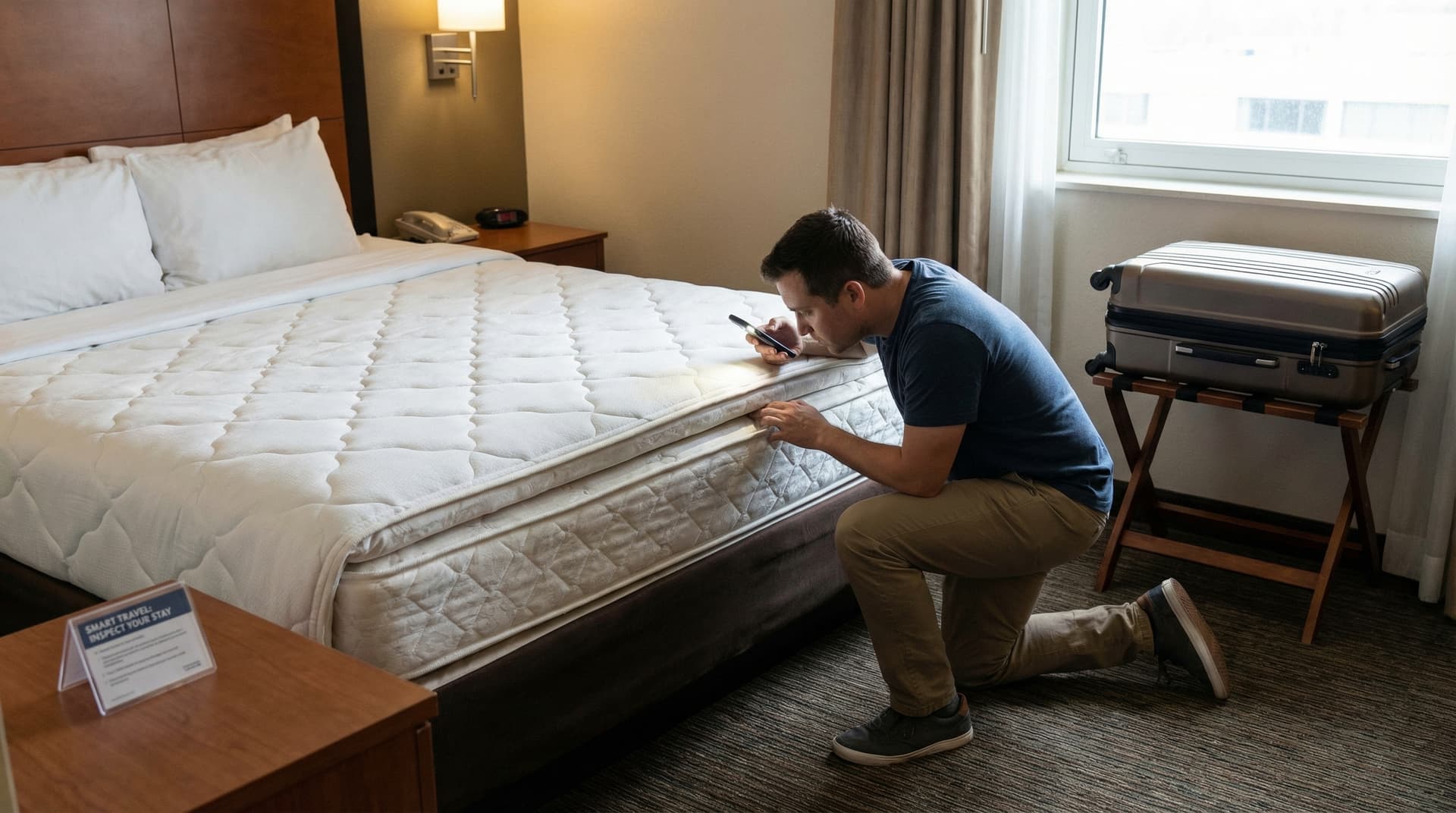

Key Takeaways
- 1Always inspect hotel rooms before bringing in luggage or unpacking
- 2Check mattress seams, headboards, and upholstered furniture for signs of bed bugs
- 3Keep luggage on luggage racks or in bathrooms - never on beds or carpeted floors
- 4Heat kills bed bugs - wash and dry all travel clothes on high heat upon return
- 5If you suspect exposure, act immediately - early detection prevents infestations
Understanding Your Bed Bug Risk While Traveling
Bed bugs do not discriminate by hotel star rating or price point. Five-star resorts and budget motels alike can have bed bug problems. These insects are expert hitchhikers, moving from place to place in luggage, clothing, and personal items.
A single pregnant female bed bug can start an infestation in your home. Since bed bugs can survive months without feeding, even brief exposure at a hotel can result in bringing them home if you are not careful.
The good news: with proper precautions, you can dramatically reduce your risk of encountering bed bugs or bringing them home with you.
How to Inspect a Hotel Room
Bring a small flashlight or use your phone light. Bed bugs hide in dark crevices, and good lighting makes them much easier to spot.
Before bringing your luggage into the room and definitely before unpacking, conduct a quick inspection. This takes 5-10 minutes and can save you months of problems.
- Leave luggage outside or in the bathroom - The bathroom is typically the least likely place to find bed bugs due to hard surfaces.
- Pull back bed linens - Check the mattress seams, especially at corners and along piping. Look for live bugs, dark spots (fecal matter), shed skins, or tiny white eggs.
- Inspect the headboard - If possible, look behind it. Bed bugs often hide in screw holes, crevices, and the joint where the headboard meets the frame.
- Check upholstered furniture - Inspect seams of chairs, sofas, and cushions in the room.
- Look at the nightstand - Check in drawers, behind the nightstand, and in any crevices.
- Examine the luggage rack - If you will use it, inspect the straps and joints first.
What You Are Looking For
If you find any signs of bed bugs, request a different room immediately - preferably in a different part of the hotel. Bed bugs can travel between adjacent rooms through wall voids and electrical outlets.
Know the signs of bed bug presence:
- Live bed bugs - Adults are reddish-brown, flat, oval, and about the size of an apple seed. Nymphs are smaller and lighter colored.
- Dark spots - Bed bug fecal matter appears as dark brown or black spots, often in clusters. These may bleed into fabric like a marker.
- Shed skins - As bed bugs grow, they molt. These translucent, empty shells accumulate near hiding spots.
- Eggs - Tiny (1mm), white, and often found in clusters in protected areas.
- Rusty or red stains - Blood spots on sheets from crushed bugs or from bites.
- Musty odor - Heavy infestations have a distinctive sweet, musty smell.
Protecting Your Luggage
Your luggage is the primary vector for bringing bed bugs home. Protect it throughout your trip:
- Use hard-shell suitcases - Fewer places for bed bugs to hide compared to fabric bags.
- Keep luggage on hard surfaces - Use the luggage rack (after inspecting it), bathroom counter, or desk - never the bed or carpeted floor.
- Store luggage in large plastic bags - Heavy-duty garbage bags provide an extra barrier.
- Do not use hotel dresser drawers - Keep clothes in your suitcase instead.
- Seal dirty laundry - Use plastic bags for worn clothes. Bed bugs are attracted to human scent on clothing.
- Consider luggage with light-colored interiors - Makes bed bugs easier to spot during inspection.
What to Do When You Return Home
Heat is your best weapon against bed bugs. They die at temperatures above 120F. Both washing and drying on high heat kills all life stages, including eggs.
The period immediately after travel is critical for preventing an infestation in your home.
- Do not bring luggage inside immediately - If possible, inspect and unpack in a garage, porch, or bathtub - somewhere with hard surfaces.
- Inspect your luggage thoroughly - Check all pockets, seams, folds, and compartments.
- Immediately wash all clothes in hot water - Regardless of whether they were worn. Dry on high heat for at least 30 minutes.
- Vacuum your suitcase - Pay attention to seams, pockets, and corners. Empty the vacuum outside immediately.
- Consider heat-treating luggage - Large black plastic bags left in a hot car (120F+ interior) can kill bed bugs.
- Store luggage away from bedrooms - In a garage, basement, or closet away from sleeping areas.
If You Suspect Bed Bug Exposure
Do NOT try to treat a suspected bed bug problem with store-bought sprays or bug bombs. These products rarely eliminate infestations and can cause bed bugs to scatter throughout your home, making professional treatment more difficult.
If you think you may have been exposed to bed bugs or are worried you brought them home:
- Act immediately - Early detection is crucial. A small introduction is much easier to eliminate than an established infestation.
- Do not panic, but do not delay - Take immediate action, but remember that prompt professional treatment is highly effective.
- Heat-treat everything possible - Wash, dry on high heat, and/or bag items for heat treatment.
- Inspect your bed - Check your mattress seams, box spring, and bed frame for signs.
- Call a professional - If you find any evidence or develop bites, professional inspection and treatment is the fastest path to resolution.
- Do not try DIY treatment - Over-the-counter products are often ineffective and can spread bed bugs to other areas.
When to Call Professional Pest Control
If you suspect bed bugs, call Green Guard at (208) 297-7947 for a professional inspection. Bed bug treatment requires specialized expertise - we provide thorough treatment starting at $49. Early intervention prevents expensive, extensive infestations.
Professional bed bug treatment is necessary if you have an active infestation.
- Thorough inspection - Professionals identify the extent of the infestation and all affected areas.
- Multiple treatment methods - Effective bed bug control usually combines heat treatment, targeted chemical application, and ongoing monitoring.
- Follow-up treatments - Most infestations require multiple treatments to eliminate all life stages.
- Preparation guidance - You will receive specific instructions for preparing your home.
- Guaranteed results - Professional treatment comes with follow-up and guarantees that DIY methods cannot provide.
Need Professional Help?
Get Same-Day Pest Control in Boise
Our local experts are standing by. Guaranteed results or we re-treat for free.