
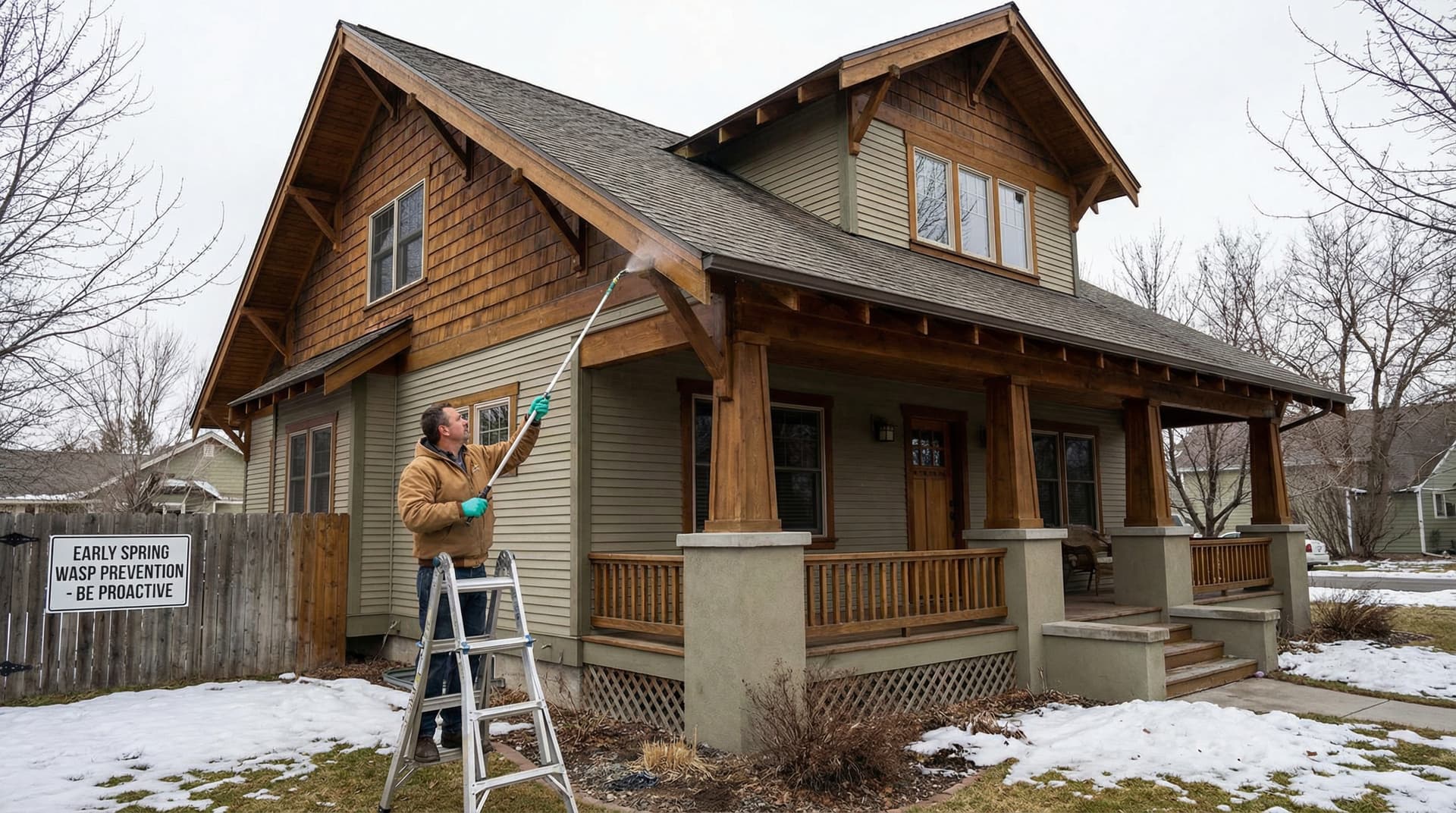

Key Takeaways
- 1Early spring (March-April) is the critical window for wasp prevention
- 2Wasps are territorial - fake nests can deter them from building nearby
- 3Sweet foods and drinks are major attractants - keep covered outdoors
- 4Professional removal is safest for established nests - wasps are aggressive when threatened
- 5Yearly prevention is more effective than dealing with active nests
Wasp Species Common in the Treasure Valley
Several wasp species establish nests in and around Boise area homes:
Paper Wasps - Build open, umbrella-shaped nests under eaves and in doorframes. Less aggressive than yellowjackets.
Yellowjackets - Build enclosed nests in ground cavities, wall voids, and attics. Highly aggressive, especially in late summer.
Bald-Faced Hornets - Build large, football-shaped paper nests in trees, shrubs, and on structures. Very aggressive when nest is disturbed.
Mud Daubers - Build tube-shaped mud nests on walls and under eaves. Generally non-aggressive.
Spring Prevention: Your Best Defense
A thorough spring inspection and treatment is far easier and safer than dealing with an active nest in summer. Green Guard offers spring prevention treatment starting at $49.
Early spring (March-April in Idaho) is when queens emerge from hibernation to start new colonies. This is your window to prevent nests before they are established.
- Inspect your home in early March - Look for overwintering queens and last year's abandoned nests.
- Remove old nests - Wasps will not reuse old nests, but removing them eliminates protected spots where new queens might start.
- Seal potential nesting cavities - Gaps under eaves, holes in siding, and openings to wall voids.
- Check outdoor furniture and equipment - Grills, playsets, and stored items are common nesting sites.
- Schedule professional treatment - Preventive perimeter treatment in spring creates a barrier before nests form.
Use Territorial Deterrents
Territorial deterrents work best for prevention. They are ineffective once a nest is established.
Wasps are territorial and avoid building nests near existing colonies. You can exploit this behavior:
- Hang fake wasp nests - Commercial decoys or brown paper bags shaped like nests can deter nest-building.
- Place decoys in early spring - Before queens select nesting sites in April-May.
- Use multiple decoys - One on each side of your home for best coverage.
- Position at likely nesting spots - Under eaves, near doorways, around porches.
- Replace annually - Weathered decoys lose effectiveness.
Control Food Attractants
Wasps are attracted to protein in spring/early summer and sugars in late summer. Control both:
- Keep outdoor food covered - At picnics and barbecues, use food covers.
- Use cups with lids outdoors - Wasps entering open soda cans cause many stings.
- Clean up spills immediately - Sweet drink spills are powerful attractants.
- Manage fruit trees - Pick fruit promptly and clean up fallen fruit daily.
- Keep hummingbird feeders away from activity areas - They attract wasps seeking sugar.
What to Do If You Find a Nest
Wasp stings can be life-threatening for people with allergies. If anyone in your household has wasp allergies, do not attempt DIY removal. Call Green Guard at (208) 297-7947 for safe, professional nest removal.
Despite prevention efforts, wasps may still establish nests. Here is how to handle discovered nests safely:
- Keep your distance - Do not approach, disturb, or attempt to spray an active nest without proper equipment.
- Mark the location - So family members and guests know to avoid the area.
- Assess the size - Small nests (golf ball size or smaller) may be manageable. Larger nests require professionals.
- Consider nest location - Nests near doors, pathways, or play areas are higher risk and should be removed.
- Call professionals for large or difficult nests - Yellowjacket nests, nests in walls, and large paper wasp nests are dangerous to remove without proper protection.
When to Call a Professional
Green Guard offers wasp prevention and nest removal starting at $49. Our quarterly service at $119 includes ongoing protection throughout wasp season. We guarantee our work - if wasps return, so do we at no extra charge. We offer free re-service if problems occur between regular treatments.
Professional treatment provides the most reliable wasp prevention and is essential for safe nest removal. Call Green Guard Pest Control at (208) 297-7947 for any of these situations:
- Any nest larger than a golf ball - Larger nests contain more wasps and are dangerous to remove without protection.
- Nests in walls, attics, or ground cavities - These require professional access and treatment.
- Yellowjacket nests - Yellowjackets are highly aggressive. Professional removal is always recommended.
- Anyone in your household has wasp allergies - Do not risk anaphylaxis. Let professionals handle all wasp issues.
- Nests near high-traffic areas - Doorways, pathways, and play areas require immediate professional removal.
- Multiple nests on your property - Indicates conditions attracting wasps that need professional assessment.
- Prevention before wasp season - Spring treatment prevents nest establishment.
Need Professional Help?
Get Same-Day Pest Control in Boise
Our local experts are standing by. Guaranteed results or we re-treat for free.