

Key Takeaways
- 1Moisture is the #1 factor attracting termites - fix leaks and drainage issues immediately
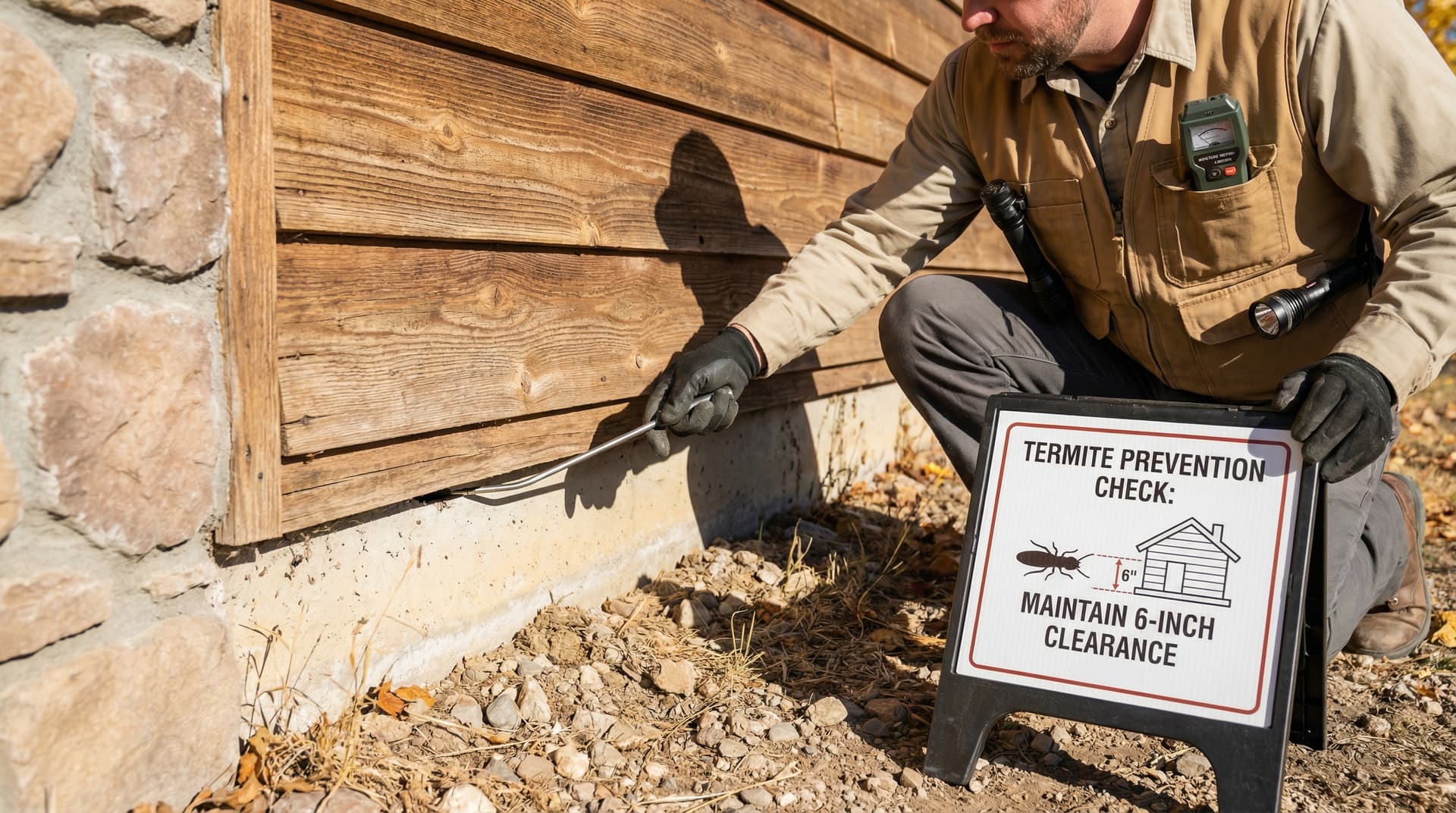
- 2Wood touching soil provides direct termite access - maintain at least 6 inches clearance
- 3Subterranean termites are most common in Idaho - they travel through mud tubes from soil
- 4Annual professional inspections catch problems early before major damage occurs
- 5Most homeowner insurance does NOT cover termite damage - prevention is essential
Termite Threat in Idaho
While Idaho is not considered a high-risk termite state like the Southeast, subterranean termites are established in the Treasure Valley and cause significant damage to local homes. The moderate risk classification often leads homeowners to neglect protection until it is too late.
Subterranean termites are the primary species in Idaho. They live in soil and build mud tubes to reach wood structures above ground. A mature colony can contain hundreds of thousands of termites, consuming several pounds of wood annually.
The average termite damage repair costs $3,000-$8,000, and homeowner insurance typically excludes termite damage. Prevention and early detection are far more cost-effective than repair.
Eliminate Moisture Problems
A moisture meter reading above 20% in wood is in the termite-attractive range. Sustained moisture is the primary factor that makes homes vulnerable to termite attack.
Termites need moisture to survive. Dry conditions make your home far less attractive to termite colonies.
- Fix plumbing leaks immediately - Even small drips create conditions termites need.
- Ensure proper drainage - Grade soil to slope away from foundation. Water should never pool near your home.
- Repair leaky faucets and irrigation - Outdoor moisture sources near foundations attract termites.
- Maintain gutters and downspouts - Direct water at least 3 feet from foundation.
- Ventilate crawl spaces - Moisture buildup in crawl spaces creates ideal termite conditions.
- Use dehumidifiers in damp areas - Basements and crawl spaces should stay below 50% humidity.
- Fix roof leaks promptly - Moisture in walls and attics attracts termites.
Eliminate Wood-to-Soil Contact
Walk your foundation perimeter and look for any wood touching or near the soil. Common violations include decorative wood borders, planter boxes, and door/window frames that have settled into soil.
When wood touches soil, it provides termites with direct, hidden access to your home structure.
- Maintain 6+ inches between soil and wood - This includes siding, door frames, and wooden structural elements.
- Use concrete or metal supports - For decks, porches, and steps touching the ground.
- Remove wood debris from soil - Construction scraps, buried lumber, and roots against foundations attract termites.
- Install termite shields - Metal barriers between foundation and wood framing help prevent hidden access.
- Use treated lumber for ground contact - Pressure-treated wood resists termites (but is not immune).
- Avoid stacking wood against the house - Even temporarily during construction or landscaping.
Know the Warning Signs
If you see termite swarmers inside your home or discover mud tubes, you likely have an active infestation requiring professional treatment. Do not delay - call Green Guard at (208) 297-7947 immediately.
Early detection can save thousands in repair costs. Know what to look for:
- Mud tubes - Pencil-sized tubes of mud running up foundation walls, along pipes, or in crawl spaces. This is termite highway.
- Swarmers - Winged termites (or their discarded wings) indoors, especially in spring. This indicates a mature colony nearby.
- Damaged wood - Wood that sounds hollow when tapped, or shows maze-like patterns when broken open.
- Blistering paint - Paint that appears to bubble, which may indicate termites or moisture beneath.
- Frass - Drywood termite droppings look like tiny, six-sided pellets (less common in Idaho).
- Stuck doors/windows - Termite damage can cause frames to warp.
Landscape and Exterior Prevention
Your landscaping and exterior practices significantly impact termite risk. Make your property less attractive to colonies:
- Store firewood 20+ feet from your home - And keep it elevated off the ground on a metal rack.
- Remove dead trees, stumps, and wood debris - These serve as termite breeding grounds near your home.
- Create a vegetation-free zone - Keep plants and mulch at least 12 inches from foundation walls.
- Use non-wood mulch near foundation - Gravel, rubber mulch, or rock reduce termite attraction.
- Trim tree branches - Keep branches from touching roof or siding where termites could access.
- Inspect wooden structures - Fences, decks, and outbuildings can harbor termites that spread to your home.
Professional Termite Inspections
Green Guard offers professional termite inspections and prevention starting at $49. Our quarterly pest control service at $119 includes monitoring for termite activity. If treatment is needed, we provide comprehensive solutions with guaranteed results.
Annual professional inspections are the best way to catch termite problems early before damage becomes extensive.
- Complete property inspection - Foundation, crawl spaces, attic, interior and exterior walls thoroughly examined.
- Trained eyes - Professionals spot subtle signs homeowners miss.
- Moisture detection equipment - Identifying conditions that attract termites before damage occurs.
- Detailed report - Documentation of findings and recommendations for your records.
- Treatment options - If problems are found, immediate remediation is possible.
- Peace of mind - Annual inspection certificate may be required for home sales.
When to Call a Professional
Termite damage accumulates silently over months or years. By the time you see visible signs, significant damage may already exist. Early professional intervention saves thousands in repair costs.
Contact Green Guard Pest Control at (208) 297-7947 immediately if you notice any of these warning signs:
- Mud tubes on foundation walls - Even one tube indicates termites are accessing your home.
- Swarmers inside your home - Winged termites indoors mean a mature colony is established nearby.
- Hollow-sounding wood - Tap wooden structures with a screwdriver handle to test.
- Discarded wings near windows or doors - Swarmers shed wings after mating flights.
- Visible damage to wood structures - Damage progresses quickly once started.
- You are buying or selling a home - Professional inspection protects your investment.
Need Professional Help?
Get Same-Day Pest Control in Boise
Our local experts are standing by. Guaranteed results or we re-treat for free.