

Key Takeaways
- 1Flying ants indoors indicate a mature colony (usually 2+ years old) in or near your home
- 2Swarms occur in spring when conditions are right - warm, humid days following rain
- 3Carpenter ant swarmers (large, black, flying ants) indicate potential structural damage
- 4Flying ants vs. termites: ants have pinched waists and elbowed antennae; termites don't
- 5Professional treatment is essential - the colony, not just swarmers, must be eliminated. Call (208) 297-7947.
What Are Ant Swarmers?
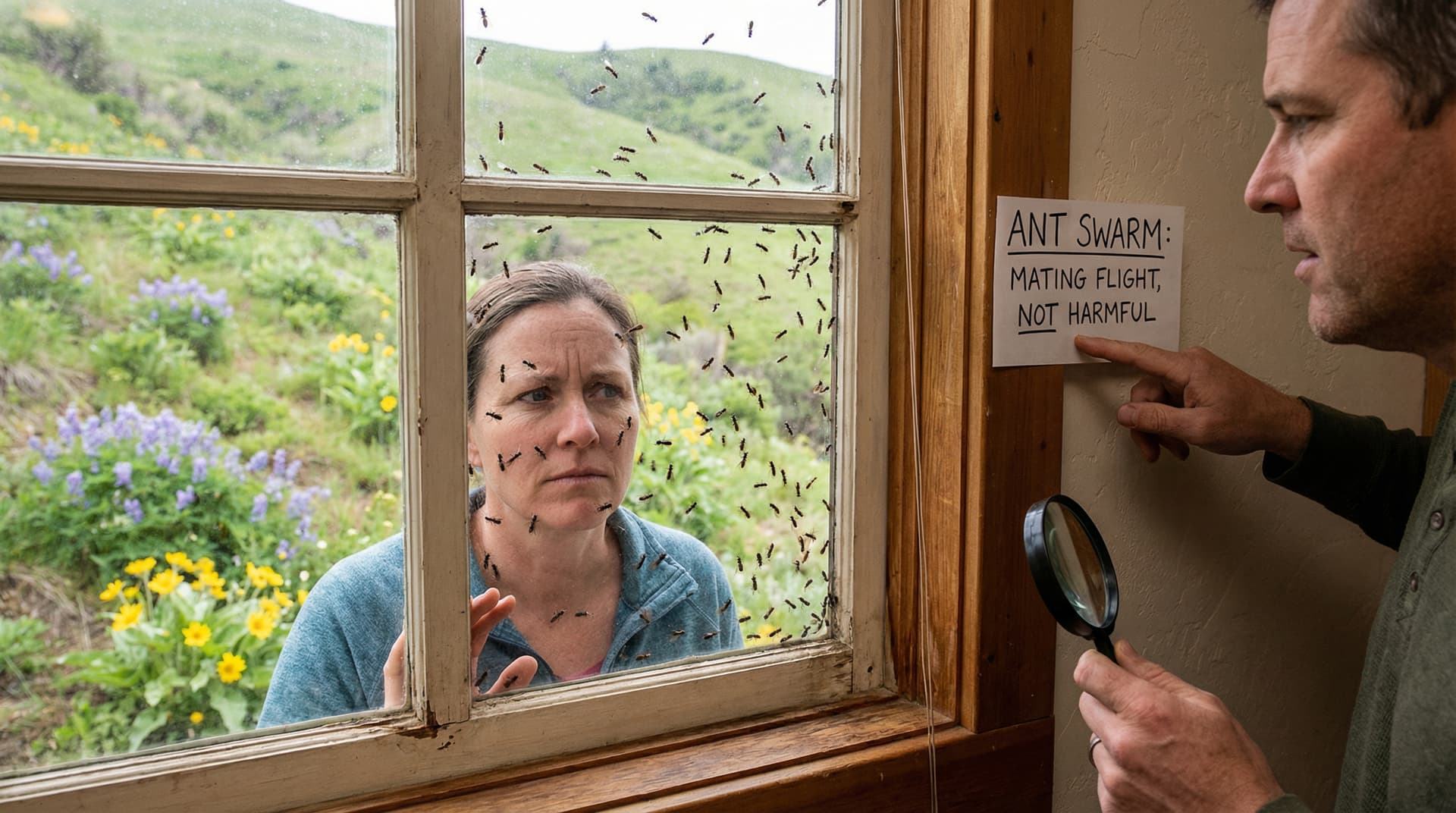
Ant swarmers are the reproductive members of ant colonies - winged males and females (future queens) that leave established colonies to mate and start new colonies. When you see flying ants inside your home, you're witnessing part of this reproductive cycle.
The appearance of swarmers tells you important information: a colony has matured enough (typically 2+ years old) to produce reproductives. If those swarmers are appearing inside your home, there's almost certainly a colony inside or immediately adjacent to your structure.
When Do Ant Swarms Occur in the Treasure Valley?
Swarms often occur simultaneously across a region as multiple colonies respond to the same environmental triggers. If your neighbors are seeing swarmers, inspect your home carefully.
In the Boise area, ant swarming season typically runs from late March through early June, with peak activity in April and May. Swarms are triggered by:
- Warm temperatures - Daytime highs above 70°F
- High humidity - Often following spring rains
- Calm conditions - Low wind for flight
- Colony maturity - Only mature colonies produce swarmers
- Time of day - Often in afternoon or early evening
Identifying Ant Swarmers
Carpenter ant swarmers inside your home are a serious warning sign. A colony old enough to produce swarmers has likely been damaging wood in your structure for at least 2-3 years. Immediate professional treatment is essential.
Not all flying ants are equally concerning. Identifying the species helps determine the urgency of treatment:
Carpenter Ant Swarmers (Most Concerning)
- Size: Large - 1/2 to 3/4 inch including wings
- Color: Black, sometimes with reddish tones
- Wings: Front wings noticeably larger than back wings
- Body: Pinched waist, elbowed antennae, smooth thorax
- Significance: Indicates a mature colony potentially damaging your home's structure
Odorous House Ant Swarmers
- Size: Small - about 1/8 inch plus wings
- Color: Dark brown to black
- Smell: Rotten coconut odor when crushed
- Body: Single node, hidden by abdomen
- Significance: Nuisance pest; colonies may be inside walls but don't cause structural damage
Pavement Ant Swarmers
- Size: Small - about 1/8 inch plus wings
- Color: Dark brown to black with lighter legs
- Body: Two nodes, grooved thorax
- Nesting: Usually outside under concrete, stones, pavers
- Significance: Typically outdoor nesters; indoor swarmers often come from colonies under foundation
Flying Ants vs. Termites
If you're unsure whether you're seeing ants or termites, capture a few specimens (tape them to white paper) and contact a professional for identification. The distinction affects treatment strategy.
Flying ants and termite swarmers appear similar but have key differences. Accurate identification matters because treatment approaches differ:
- Waist: Ants have pinched waists; termites have broad, straight waists
- Antennae: Ant antennae are elbowed (bent); termite antennae are straight, beaded
- Wings: Ant front wings are larger than back; termite wings are equal size
- Wing durability: Termite wings break off easily; ant wings stay attached
- Body color: Most ant swarmers are dark; termite swarmers are often lighter
What Indoor Swarms Mean for Your Home
Flying ants appearing inside your home is a significant event that tells you several things:
- A mature colony exists - Only colonies 2+ years old produce swarmers
- The colony is nearby - Swarmers don't travel far; the colony is in or immediately adjacent to your home
- The problem is established - This isn't a new infestation; it's been present for years
- The colony is healthy - Producing reproductives indicates a thriving colony
- More colonies may follow - Successful mating leads to new colonies in the area
What to Do When You See Flying Ants
Do not spray over-the-counter pesticides at swarming ants. This kills visible swarmers but does nothing to the colony. It may cause the colony to move deeper into your walls, making treatment more difficult.
If you observe flying ants inside your home, take these steps:
- Don't panic - Swarmers themselves are harmless and don't bite
- Collect specimens - Tape several to white paper for identification
- Note the location - Where are they emerging? Near windows, walls, foundations?
- Vacuum visible swarmers - This removes them without spraying pesticides
- Don't use spray pesticides - Sprays don't address the colony and may scatter it
- Call a professional - Same-day assessment is important, especially for carpenter ants
Professional Treatment for Ant Swarm Situations
Our initial service is just $49, which includes thorough inspection, species identification, and targeted treatment. Quarterly service at $119 maintains protection year-round. If ants return between visits, we re-treat at no charge. Call (208) 297-7947.
When you contact Green Guard about flying ants, here's what to expect:
- Species identification - Confirming exactly what ant species you're dealing with
- Colony location assessment - Using knowledge of ant behavior to locate the colony
- Targeted treatment - Products that workers carry back to eliminate the entire colony
- Structural inspection - For carpenter ants, assessing potential damage
- Prevention barriers - Exterior treatment to prevent re-infestation
- Follow-up monitoring - Ensuring complete colony elimination
Preventing Future Ant Problems
Once the current colony is eliminated, prevent future infestations:
- Maintain quarterly pest control - Continuous protection prevents new colonies from establishing
- Address moisture issues - Fix leaks and improve drainage; ants need water
- Seal entry points - Caulk cracks and gaps around your foundation and utilities
- Eliminate attractants - Store food properly, clean up spills and crumbs
- Trim vegetation - Keep plants from touching your home's exterior
- Monitor for activity - Early detection allows early treatment
Need Professional Help?
Get Same-Day Pest Control in Boise
Our local experts are standing by. Guaranteed results or we re-treat for free.