

Key Takeaways
- 1Termites exist in Idaho but are less common than carpenter ants
- 2Subterranean termites are the only species found in Idaho
- 3They build mud tubes from soil to wood - a key identifier
- 4Termite swarmers appear similar to carpenter ant swarmers but have key differences
- 5Carpenter ants cause similar damage and are more common in Idaho
Termites in Idaho: Understanding the Risk
When homeowners in Boise find winged insects or wood damage, they often fear termites. While termites do exist in Idaho, they're significantly less common here than in southern states. The cold winters and dry climate limit their range and activity.
That said, subterranean termites have been found in the Treasure Valley, especially in areas near the Snake River and in warmer microclimates. Understanding termite identification helps you know what you're dealing with - and in Idaho, the more common culprit for wood damage is actually the carpenter ant.
Termite Species in Idaho
Only one termite type is found in Idaho:
Subterranean Termites
- Workers: Small (1/8 inch), creamy white, no eyes
- Soldiers: Larger head with mandibles, defend colony
- Swarmers (reproductives): Dark bodied, 1/4 inch, with wings
- Colony location: Underground in soil, build mud tubes to reach wood
- Idaho distribution: Warmer areas, river valleys, irrigated landscapes
Where Termites Are Found in Idaho
Idaho's termite activity is primarily from March through October, with swarms most common in spring. Cold winters significantly limit termite populations compared to southern states.
Termite activity in Idaho is concentrated in specific areas:
- Treasure Valley (Boise, Nampa, Caldwell) - Warmer climate, irrigated landscapes
- Lewiston-Clarkston area - Lowest elevation in Idaho, warmest winter temps
- Along the Snake River - Moisture and moderate temperatures
- Irrigated farmland - Consistent soil moisture
- Older homes - Especially those with soil-to-wood contact
Termite vs Carpenter Ant: Key Differences
In Idaho, carpenter ants are a more common wood-destroying pest than termites. Here's how to tell them apart:
Body Comparison
Antennae
Termite: Straight, beaded | Carpenter Ant: Elbowed (bent)
Waist
Termite: Thick, no defined waist | Carpenter Ant: Narrow, pinched waist
Wings (swarmers)
Termite: Four equal-length wings | Carpenter Ant: Front wings longer than back
Color
Termite: Workers are white/cream; swarmers are dark | Carpenter Ant: Usually black or bicolored
Size
Termite: Workers tiny (1/8 inch) | Carpenter Ant: Large (1/4 to 1/2 inch)
Damage Comparison
Both termites and carpenter ants damage wood, but differently:
Termite Damage
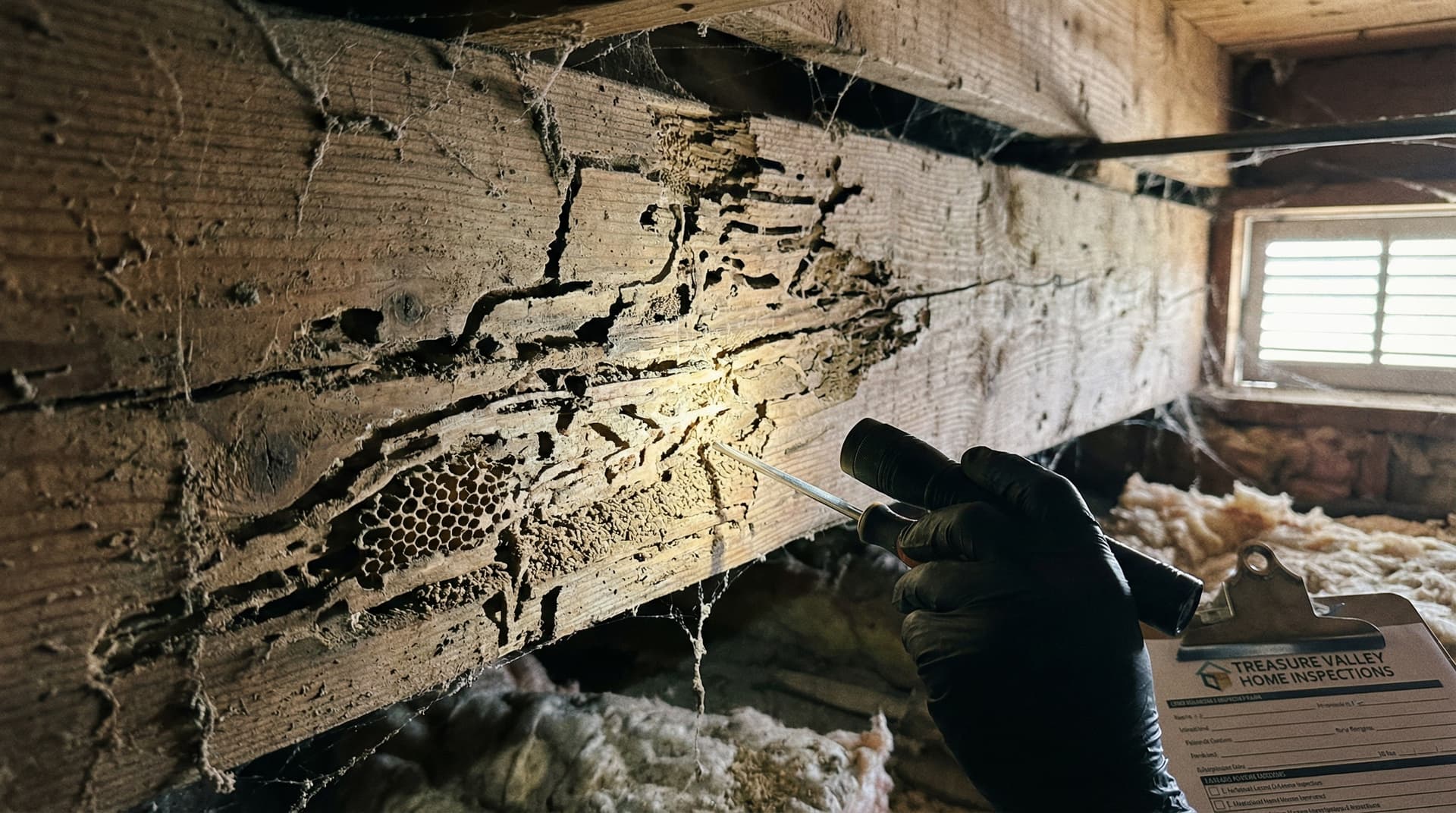
Termites eat wood for nutrition. Galleries have rough walls with soil and fecal material. Wood may look intact outside but be hollowed inside. Often includes mud tubes.
Carpenter Ant Damage
Carpenter ants excavate wood for nesting but don't eat it. Galleries are smooth and clean. They expel sawdust-like frass. Usually starts in moisture-damaged wood.
Signs of Termite Activity
If you find mud tubes on your foundation, do not disturb them. This evidence helps professionals determine the extent of activity. Take photos and call for professional inspection immediately.
Look for these indicators of termite presence:
- Mud tubes: Pencil-thick tubes on foundation walls, connecting soil to wood
- Swarmers: Winged termites indoors, especially in spring
- Discarded wings: Piles of shed wings near windows or doors
- Hollow-sounding wood: Tap wood to test for damage
- Bubbling paint: Can indicate moisture from termite activity behind walls
- Frass (termite droppings): Tiny, wood-colored pellets (drywood termites only - rare in Idaho)
Termite Prevention in Idaho
Reduce termite risk with these prevention strategies:
- Eliminate wood-to-soil contact - Maintain 6+ inches between soil and wood siding
- Fix moisture issues - Repair leaks, ensure proper drainage
- Ventilate crawl spaces - Reduce moisture buildup
- Store firewood away from home - At least 20 feet, elevated
- Remove dead wood - Stumps, dead trees, and debris near foundation
- Avoid mulch against foundation - Or use non-wood alternatives
When to Call a Professional
In Idaho, what appears to be termite damage is often actually carpenter ant damage. A professional inspection will correctly identify the pest and recommend appropriate treatment. Either way, treatment starts at just $49.
Contact Green Guard Pest Control at (208) 297-7947 for professional inspection if you notice:
- Mud tubes on foundation - Clear sign of termite activity
- Winged insects emerging indoors - Need identification (termite vs ant)
- Piles of wings - Near windows or light sources
- Wood damage of any kind - Professional can identify the cause
- You're buying a home - Pre-purchase termite inspection recommended
- Neighbor has termites - They can spread to adjacent properties
Need Professional Help?
Get Same-Day Pest Control in Boise
Our local experts are standing by. Guaranteed results or we re-treat for free.