
Centipedes
Scutigera coleoptrata (house centipede) and others
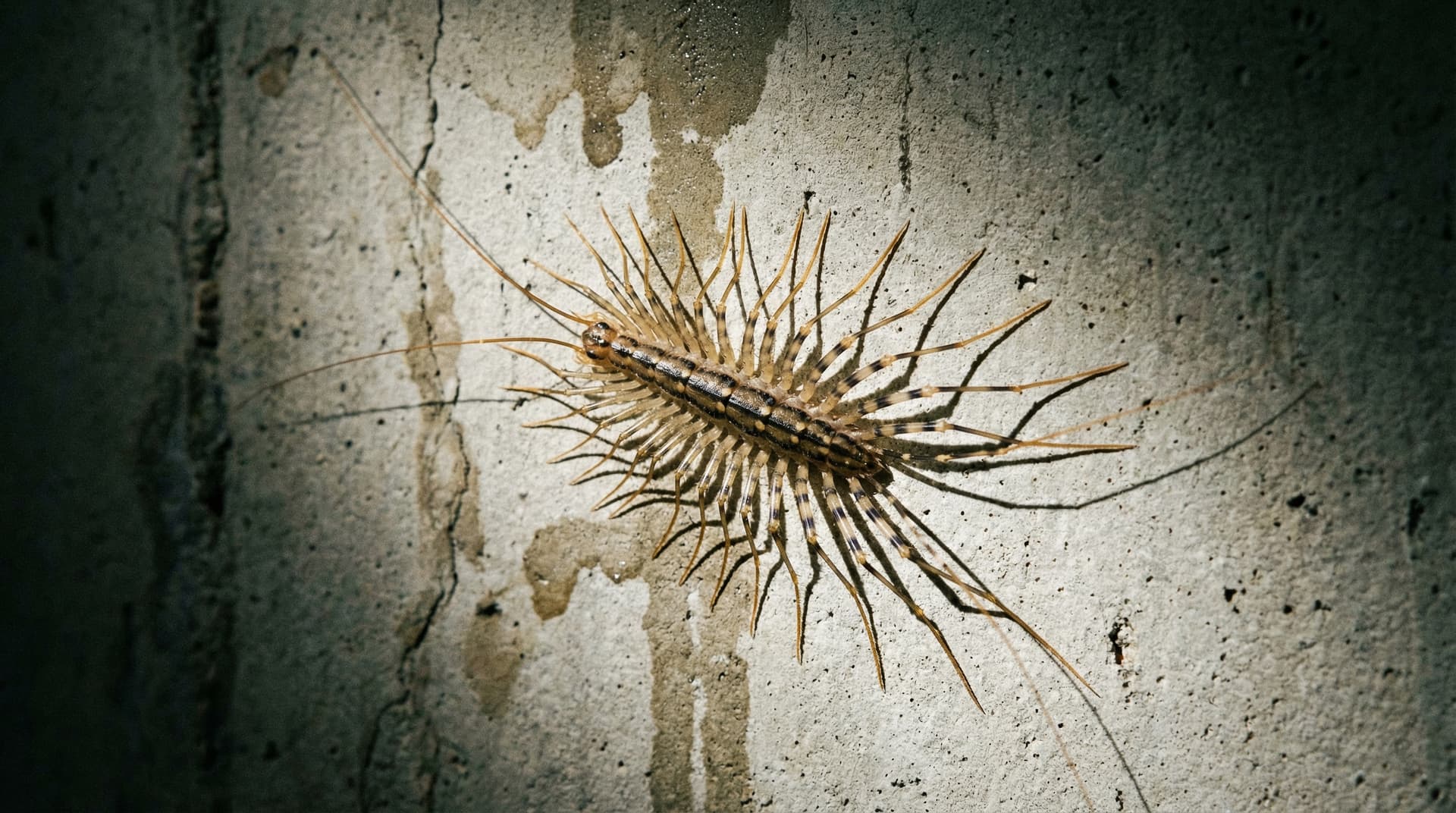
Centipedes have flattened, segmented bodies with one pair of legs per segment. House centipedes have extremely long legs and antennae, giving them a distinctive "hairy" appearance. They move very quic...
Quick Facts
100%
Satisfaction Guarantee
4.9/5
Customer Rating
24hr
Response Time
How to Identify Centipedes
Centipedes have flattened, segmented bodies with one pair of legs per segment. House centipedes have extremely long legs and antennae, giving them a distinctive "hairy" appearance.
Centipedes have flattened, segmented bodies with one pair of legs per segment. House centipedes have extremely long legs and antennae, giving them a distinctive "hairy" appearance. They move very quickly. Unlike millipedes, centipedes are carnivorous predators.
Centipedes Behavior & Habits
Understanding how centipedes behave helps prevent infestations
Centipedes are predators that hunt insects, spiders, and other small arthropods. They're nocturnal and prefer dark, damp areas. House centipedes commonly live indoors year-round. They can bite if handled but rarely do so, and bites are usually minor.
Centipedes Risks & Dangers
What centipedes can do to your health and property
Health Risks
Large centipedes can bite, causing pain similar to a bee sting. Bites are rare and usually only occur if the centipede is handled or trapped against skin. Allergic reactions are possible but uncommon.
Property Damage
No property damage. Centipedes are actually beneficial predators that eat household pests. However, their appearance disturbs many people.
Signs of Centipedes Infestation
Look for these indicators in your home
Centipedes in Boise & the Treasure Valley
House centipedes are common in Boise homes, especially in basements and bathrooms. They're more frequently seen in older homes with moisture issues. While startling to encounter, they're beneficial predators that eat spiders, cockroaches, and other pests.
How We Eliminate Centipedes
Professional treatment for complete elimination
Centipede control focuses on habitat modification and crack/crevice treatment. We reduce moisture issues, seal entry points, apply residual treatments to hiding spots, and address the prey insects that attract centipedes. Reducing their food source (other insects) is key to long-term control.
How to Prevent Centipedes
Steps you can take to reduce the risk of infestation
Centipedes Questions Answered
Common questions about identification, prevention, and treatment
Are centipedes dangerous?
House centipedes can bite but rarely do, and bites are typically no worse than a bee sting. They're not aggressive and prefer to flee. Large outdoor centipedes have more painful bites but are seldom encountered indoors.
Why do I have centipedes in my house?
Centipedes need moisture and prey. Their presence indicates: 1) damp conditions somewhere in your home, and 2) other insects for them to eat. Fixing moisture issues and reducing other pests eliminates the conditions they need.
Should I kill house centipedes?
Centipedes are actually beneficial—they eat spiders, cockroaches, silverfish, and other pests. However, if their presence is intolerable, reducing moisture and treating entry points will decrease populations.
Similar Pests
Learn about other pests in this category