
Cluster Flies
Pollenia species
Cluster flies are slightly larger than house flies, with dark gray bodies covered in golden-yellow hairs. They move sluggishly compared to house flies and don't buzz as loudly. They overlap their wing...
Quick Facts
100%
Satisfaction Guarantee
4.9/5
Customer Rating
24hr
Response Time
How to Identify Cluster Flies
Cluster flies are slightly larger than house flies, with dark gray bodies covered in golden-yellow hairs. They move sluggishly compared to house flies and don't buzz as loudly.
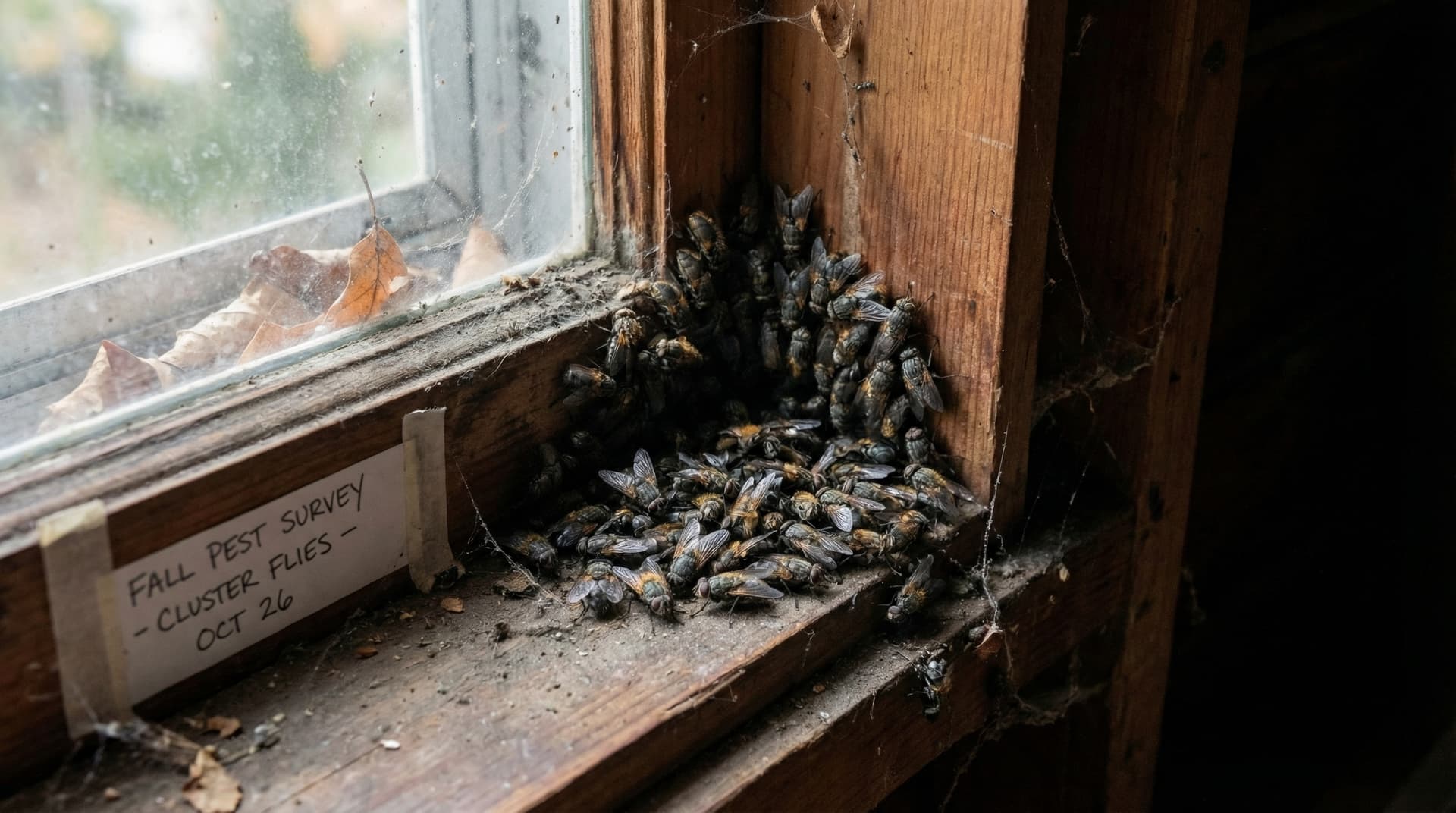
Cluster flies are slightly larger than house flies, with dark gray bodies covered in golden-yellow hairs. They move sluggishly compared to house flies and don't buzz as loudly. They overlap their wings when at rest (house flies hold wings in a V). They cluster in large groups, hence the name.
Cluster Flies Behavior & Habits
Understanding how cluster flies behave helps prevent infestations
Cluster fly larvae are parasites of earthworms—adults aren't associated with garbage or filth. In fall, adults seek shelter in buildings, clustering in attics, wall voids, and around windows. They emerge on warm days throughout winter and become active again in spring. They're attracted to light.
Cluster Flies Risks & Dangers
What cluster flies can do to your health and property
Health Risks
Cluster flies don't bite, spread disease, or breed indoors. They're purely nuisance pests.
Property Damage
No structural damage. Large numbers can be extremely annoying, especially when they appear at windows or in living spaces on warm winter days.
Signs of Cluster Flies Infestation
Look for these indicators in your home
Cluster Flies in Boise & the Treasure Valley
Cluster flies are common in Boise homes, especially those with lawns (earthworms = larvae food source). Rural and suburban properties with extensive grass areas typically have more problems. Infestations seem to worsen year after year if not addressed.
How We Eliminate Cluster Flies
Professional treatment for complete elimination
Cluster fly control requires fall preventive treatment of exterior surfaces and entry points before flies enter. Once inside, attic treatments and interior measures reduce populations. Exclusion work prevents reinfestation the following year.
How to Prevent Cluster Flies
Steps you can take to reduce the risk of infestation
Cluster Flies Questions Answered
Common questions about identification, prevention, and treatment
Where are these flies coming from in winter?
Cluster flies entered your home in fall to overwinter. They hide in wall voids and attics, emerging on warm, sunny days. They're trying to get outside, not breeding indoors.
Similar Pests
Learn about other pests in this category