

Key Takeaways
- 1Elm seed bugs are invasive European insects that arrived in Idaho around 2012
- 2They're smaller than box elder bugs (1/3 inch) and brown/rust colored
- 3They release a strong, unpleasant odor when disturbed or crushed
- 4Invasions can number in the thousands - far exceeding box elder bug numbers
- 5They enter homes in summer (seeking cool) and fall (seeking warmth)
Idaho's Newest Pest Problem
If you think you've been seeing more unfamiliar bugs around your Boise home in recent years, you're not imagining it. The elm seed bug (Arocatus melanocephalus) is a relatively new invasive species from Europe that was first detected in Idaho around 2012. Since then, it has become one of the state's most complained-about pests.
These bugs are often confused with box elder bugs, but they're actually a different species with different behaviors - and can invade homes in even larger numbers.
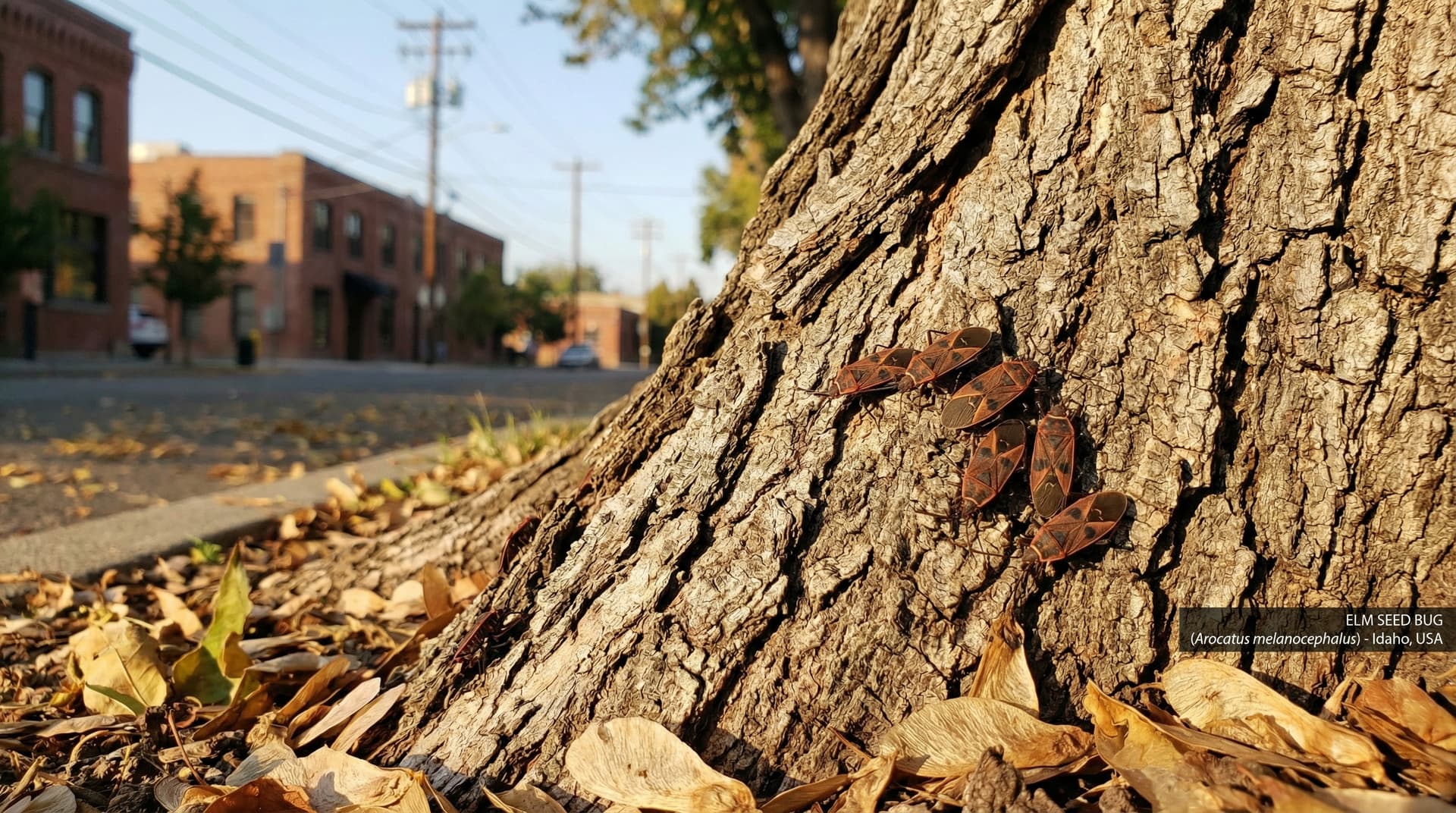
Elm Seed Bug Identification
Elm seed bugs have distinct characteristics that set them apart from similar insects:
- Size: About 1/3 inch - smaller than box elder bugs
- Color: Dark brown to rust-red with darker brown markings
- Pattern: Distinctive black and rust triangular marking behind head
- Wings: Darker wing tips create a diamond pattern when folded
- Smell: Release pungent odor when disturbed (described as bitter almond or cherry-like)
- Body: Oval-shaped, flattened
Elm Seed Bug vs Box Elder Bug
These two are often confused. Key differences:
Size
Elm Seed Bug: 1/3 inch | Box Elder Bug: 1/2 inch
Color
Elm Seed Bug: Brown/rust | Box Elder Bug: Black with red/orange
Smell
Elm Seed Bug: Strong pungent odor | Box Elder Bug: Mild odor
Timing
Elm Seed Bug: Summer and fall | Box Elder Bug: Primarily fall
Numbers
Elm Seed Bug: Can be overwhelming | Box Elder Bug: Moderate congregations
Elm Seed Bug Behavior in Idaho
Understanding their behavior explains why they're such a significant nuisance:
- Feed on elm seeds - Attracted to areas with elm trees
- Summer invasions - Enter homes seeking cooler temperatures during hot days
- Fall invasions - Also enter seeking overwintering sites like box elder bugs
- Enormous numbers - Can invade by the thousands, far more than box elder bugs
- Year-round appearances - May become active on warm days during winter
- Attracted to light - Often found near windows and light fixtures
Why Elm Seed Bugs Are So Problematic
Elm seed bugs can enter through gaps as small as 1/16 inch - much smaller than many other pests. Comprehensive sealing is essential for effective exclusion.
Several factors make elm seed bugs particularly troublesome:
- Massive populations - Can number in the thousands on a single home
- Strong odor - Release pungent defensive smell when disturbed
- Multiple entry events - Both summer and fall invasions possible
- New pest status - Many homeowners don't recognize them or know what to do
- Overwhelming presence - Sheer numbers create psychological stress
- Difficult exclusion - Small size allows entry through tiny gaps
Good News: No Structural Damage
While elm seed bugs are extremely annoying, they're not dangerous. The main concerns are the odor they release and the psychological impact of having thousands of bugs in or around your home.
Like box elder bugs, elm seed bugs don't cause physical damage:
- No biting - Cannot bite humans or pets
- No structural damage - Don't eat wood, fabric, or food
- No disease transmission - Not known to spread illness
- No staining - Less likely to stain than box elder bugs
- Nuisance only - Their only problem is their overwhelming presence
Preventing Elm Seed Bug Invasions
Due to their small size, comprehensive sealing is critical:
- Seal all cracks and gaps - Even tiny ones (1/16 inch)
- Weatherstrip doors and windows - Ensure tight seals all around
- Screen all vents - Use fine mesh on soffit and gable vents
- Seal around utilities - Gaps around pipes, wires, and conduits
- Caulk window frames - Both inside and outside
- Professional perimeter treatment - Creates chemical barrier before invasion
When to Treat for Elm Seed Bugs
Timing is crucial for elm seed bug control:
- Early summer (June) - Before first summer heat-driven invasions
- Late summer (August) - Before fall overwintering invasions
- Quarterly treatment - Best approach for year-round protection
- After sealing work - Treatment is more effective after exclusion
Removing Elm Seed Bugs From Your Home
If bugs have already invaded:
- Vacuum immediately - Don't let them accumulate
- Dispose of bag outside - Odor can permeate vacuum
- Don't crush them - Releases strong defensive odor
- Seal entry points - Even mid-invasion, prevent more from entering
- Professional interior treatment - Can reduce populations in wall voids
When to Call a Professional
Elm seed bug control is included in our quarterly service plans. For $49 to start and $119/quarter, you get comprehensive protection against elm seed bugs and all other common Idaho pests.
Elm seed bug invasions often require professional help. Call (208) 297-7947 when:
- You're seeing large numbers - More than occasional individual bugs
- Bugs are appearing indoors - They've found entry points
- DIY sealing isn't working - Professional exclusion may be needed
- You want prevention - Before invasion season begins
- Annual recurrence - They return to the same locations each year
Need Professional Help?
Get Same-Day Pest Control in Boise
Our local experts are standing by. Guaranteed results or we re-treat for free.