

Key Takeaways
- 1June nests are small and manageable - the same nests will be 10-100 times larger by August
- 2Yellow jacket nests are often hidden underground or in wall voids - watch for worker activity
- 3Paper wasp nests under eaves are visible and treatable in June before becoming large
- 4Professional treatment in June is safer, more effective, and less expensive than August treatment
- 5Quarterly pest control includes wasp monitoring and treatment - $49 to start, $119/quarter. Call (208) 297-7947.
Why June Is the Critical Month for Wasp Prevention
The wasp lifecycle creates a narrow window when prevention is most effective. Queens that survived winter emerged in April and May to start new colonies. By June, those colonies have begun producing workers, but nests are still small - often containing just a queen and a handful of workers.
This is the sweet spot for intervention. Nests that contain 10-50 wasps in June will contain thousands by August. Treatment is safer, faster, and more effective now. Once colonies reach peak size in late summer, they become aggressive and dangerous.
How Wasp Colonies Grow Through Summer
A yellow jacket colony can grow from a single queen in May to over 5,000 workers by August. That's exponential growth - and each week you wait makes treatment more difficult and dangerous.
Understanding wasp colony development shows why June treatment matters:
- April-May: Queen emerges, builds small initial nest, lays first eggs
- June: First workers emerge; queen focuses on egg-laying; nest expands
- July: Worker population growing rapidly; aggressive nest defense begins
- August: Colony at or near peak size (thousands of workers); maximum aggression
- September: Colonies declining; new queens produced for next year
Common Wasps in the Treasure Valley
Yellow Jackets (Most Dangerous)
- Appearance: Black and yellow striped, about 1/2 inch, smooth shiny body
- Nesting: Underground in old rodent burrows, wall voids, occasionally aerial
- Danger level: High - aggressive, sting multiple times, attack in groups
- June detection: Watch for workers flying in/out of ground holes or wall gaps
Paper Wasps
- Appearance: Slender, brown/yellow, longer legs that dangle during flight
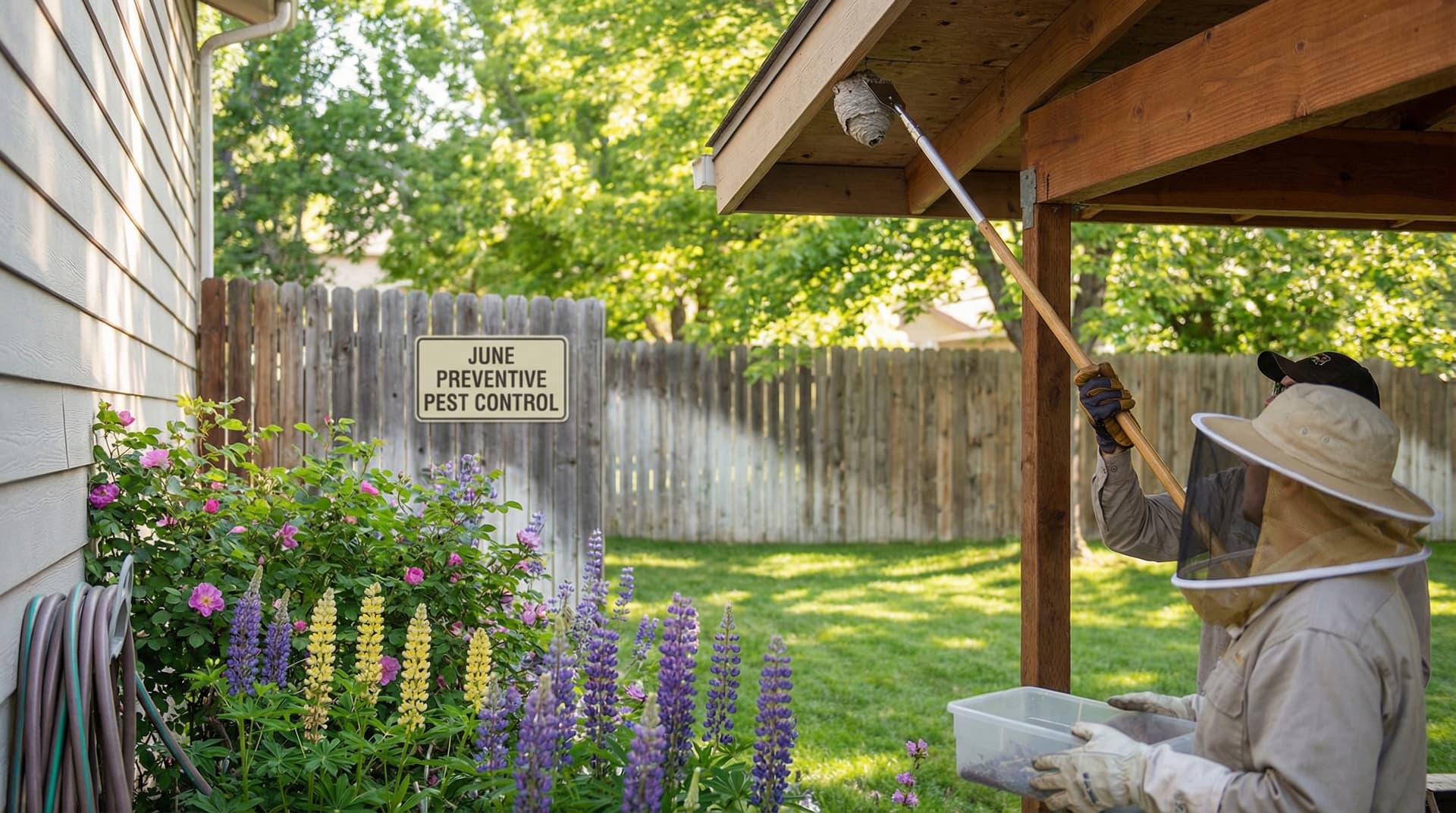
- Nesting: Open umbrella-shaped nests under eaves, in shrubs, on structures
- Danger level: Moderate - will sting if nest disturbed, less aggressive than yellow jackets
- June detection: Small umbrella nests visible under eaves and overhangs
Bald-Faced Hornets
Bald-faced hornets are extremely aggressive near their nests. Never attempt DIY removal. They attack in swarms and will pursue threats. Always call a professional.
- Appearance: Large (3/4 inch), black and white, NOT yellow
- Nesting: Large enclosed paper nests in trees, shrubs, sometimes on structures
- Danger level: High - extremely aggressive, attack in swarms, painful sting
- June detection: Football-sized gray paper nests, often in trees
How to Find Wasp Nests in June
In June, watch for wasp flight patterns rather than looking for large nests. Follow workers to locate nests. They fly directly between food sources and their nest.
Early detection allows early treatment. Inspect these areas for wasp activity:
- Under eaves and overhangs - Paper wasps love these protected spots
- In shrubs and bushes - Both paper wasps and hornets nest in vegetation
- Ground level - Watch for yellow jackets entering/exiting holes
- Wall gaps and voids - Yellow jackets nest in walls; watch for activity at gaps
- Outdoor structures - Sheds, playsets, deck undersides
- Grill covers and outdoor equipment - Protected spots attract nest-building
Why June Treatment Is Safer and More Effective
Treatment in June offers significant advantages:
- Smaller colonies - Fewer wasps mean lower sting risk during treatment
- Less defensive - Workers aren't as aggressive protecting small colonies
- Faster elimination - Smaller populations are eliminated more quickly
- Prevent reproduction - Stop colonies before new queens are produced
- Summer protection - Eliminate nests before peak outdoor activity season
- Lower cost - Smaller jobs are simpler and less expensive
The Risks of DIY Wasp Control
Wasp stings send about 500,000 Americans to emergency rooms annually. Even if you've been stung before without serious reaction, allergies can develop. Professional treatment protects you from this risk.
Even small nests carry risks with DIY treatment:
- Stinging incidents - Even small colonies will defend aggressively when threatened
- Incomplete elimination - DIY products may not kill all wasps or the queen
- Hidden nests missed - Yellow jacket nests underground or in walls are easily overlooked
- Allergic reactions - You may not know you're allergic until stung
- Improper product use - Can create toxic conditions or fire hazards
Professional June Wasp Service
Wasp treatment is included in our quarterly pest control service - just $49 to start, then $119 per quarter. We monitor for wasp activity at every visit and treat new nests as part of your service. Call (208) 297-7947 to schedule.
Our comprehensive wasp service includes:
- Complete property inspection - Finding nests you might miss, especially underground/hidden nests
- Species identification - Determining the right approach for each wasp type
- Safe treatment - Professional products and application methods
- Nest removal - Complete removal after treatment is complete
- Prevention treatment - Discouraging new nest construction
- Quarterly monitoring - Catching new nests before they become problems
Preventing Wasp Problems
Reduce wasp attraction to your property:
- Keep food covered outdoors - especially proteins and sweets
- Seal garbage cans with tight-fitting lids
- Don't leave pet food outside
- Rinse recycling - Sweet residue attracts wasps
- Fill ground holes - Old rodent burrows become yellow jacket nests
- Seal exterior gaps - Prevent wall void nesting
Need Professional Help?
Get Same-Day Pest Control in Boise
Our local experts are standing by. Guaranteed results or we re-treat for free.