

Key Takeaways
- 1Peak mosquito season in Boise runs June through August during irrigation season
- 2Mosquitoes breed in standing water - even a bottle cap full is enough for larvae
- 3Dawn and dusk are peak biting times - plan outdoor activities accordingly
- 4Irrigation creates ideal breeding conditions throughout the Treasure Valley
- 5Perimeter treatment reduces mosquito populations around your home. $49 to start, $119/quarter.
Understanding Mosquito Season in Boise
The Treasure Valley's irrigation infrastructure is a double-edged sword. While it keeps lawns green and gardens flourishing, it also creates ideal conditions for mosquito breeding. The combination of standing water in irrigation ditches, flood-irrigated yards, and warm summer temperatures produces significant mosquito populations from June through August.
Idaho is home to about 40 mosquito species, though only a handful commonly bite humans. The most common in the Boise area are Culex species (which can carry West Nile virus) and Aedes species (aggressive daytime biters).
When Are Mosquitoes Worst in Boise?
Mosquito populations spike about a week after water becomes available - that's how long it takes eggs to develop into flying adults. After heavy irrigation or rain, expect increased activity 7-10 days later.
Mosquito activity follows predictable patterns:
- Peak months: June through August (irrigation season)
- Peak times of day: Dawn (5-8am) and dusk (6-9pm)
- Peak conditions: Warm, still, humid evenings
- Population surge: 7-10 days after irrigation or rainfall
- Decline: September as temperatures cool and irrigation ends
Where Mosquitoes Breed on Your Property
Mosquitoes need standing water to breed - but surprisingly little. A single mosquito can lay 100+ eggs in water as shallow as 1/4 inch. Common breeding sites include:
- Plant saucers - Under potted plants
- Bird baths - Unchanged water becomes mosquito nurseries
- Clogged gutters - Standing water in debris
- Old tires - Classic mosquito breeding sites
- Kids' toys - Buckets, wagons, sandbox toys that hold water
- Tarps and covers - Pools of water on boat/equipment covers
- Pet water dishes - If not changed regularly
- Irrigation pooling - Low spots where water collects after irrigation
Eliminating Mosquito Breeding Sites
Walk your property weekly looking for standing water. Even a bottle cap's worth of water can produce mosquitoes. Flip, dump, or drain anything that holds water.
The most effective mosquito control starts with eliminating breeding sites:
- Empty standing water weekly - Dump any container that holds water
- Change bird bath water - At least twice weekly, or add a fountain
- Clean gutters - Ensure proper drainage with no pooling
- Fix irrigation issues - Eliminate low spots where water pools
- Maintain pools and hot tubs - Proper chlorination prevents breeding
- Stock ponds - Add mosquitofish (available free from vector control)
- Cover rain barrels - Use fine mesh to prevent mosquito access
Personal Protection Strategies
When mosquitoes are active, protect yourself and your family:
Effective Repellents
- DEET - Most effective; 25-30% concentration for adults
- Picaridin - Effective alternative to DEET, less odor
- Oil of lemon eucalyptus - Plant-based option; moderate effectiveness
- Permethrin - Apply to clothing, not skin; lasts through washings
- Avoid ineffective options - Ultrasonic devices, vitamin B, garlic don't work
Clothing and Timing
- Wear light colors - Mosquitoes are attracted to dark colors
- Cover skin - Long sleeves and pants during peak times
- Avoid dawn and dusk - Plan outdoor activities for midday when possible
- Use fans - Mosquitoes are weak fliers; air movement deters them
- Avoid heavy scents - Floral perfumes and scented products attract mosquitoes
Making Your Yard More Enjoyable
Create a more mosquito-free outdoor environment:
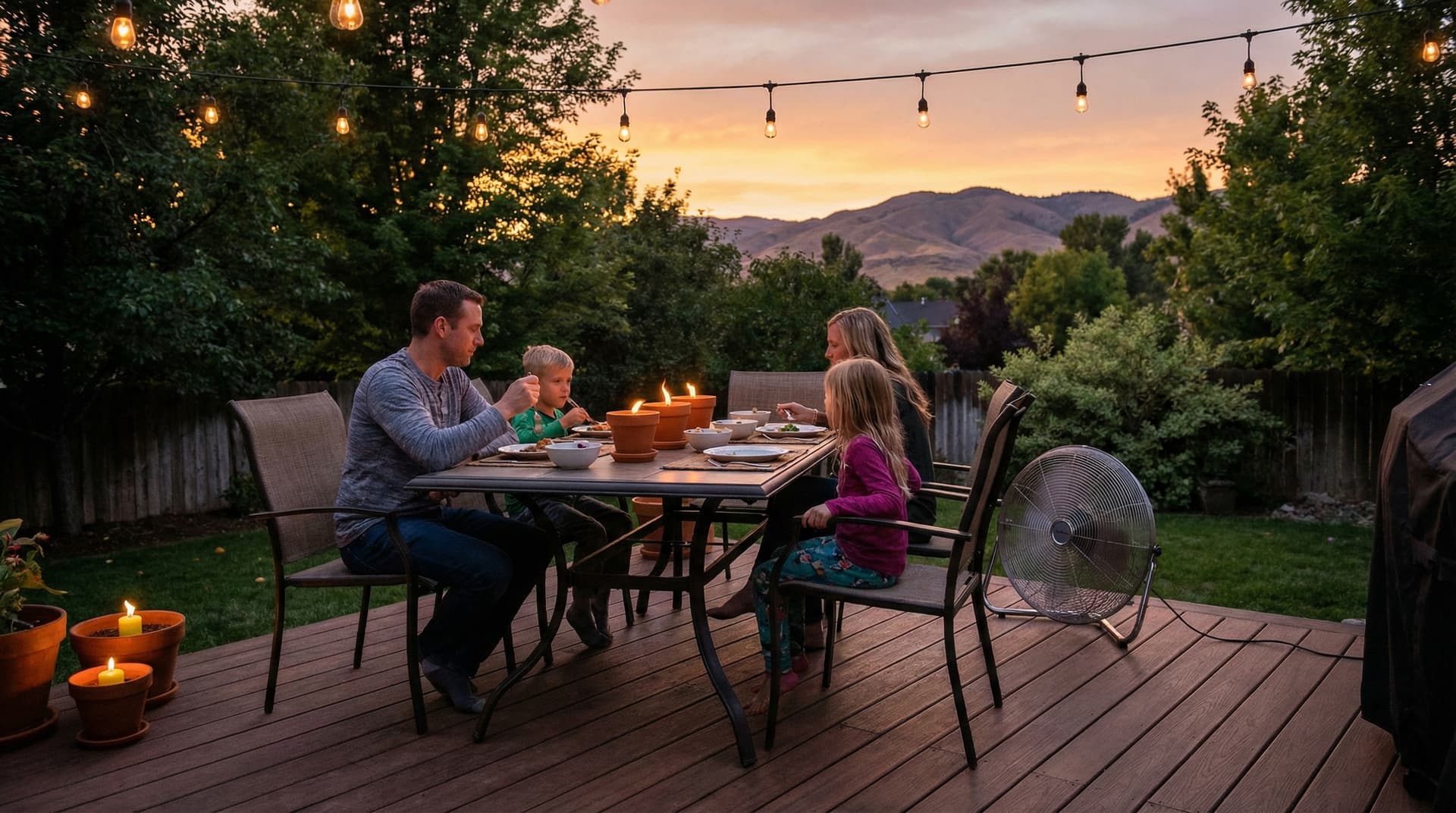
- Install fans on patios - Ceiling or standing fans create air movement mosquitoes avoid
- Use citronella strategically - Candles and torches help in immediate area only
- Consider mosquito traps - CO2 traps can reduce local populations over time
- Maintain landscaping - Trim dense vegetation where mosquitoes rest during day
- Screen outdoor spaces - Screened porches allow evening enjoyment
- Treat standing water - Mosquito dunks for water features you can't drain
Professional Mosquito Treatment
Mosquito treatment is included in our quarterly pest control service. At $49 to start and $119/quarter, you get comprehensive pest protection including mosquito population reduction around your home. Call (208) 297-7947.
Professional treatment significantly reduces mosquito populations around your home:
- Perimeter treatment - Targets areas where mosquitoes rest during the day
- Vegetation treatment - Treats shrubs, bushes, and shade areas
- Breeding site treatment - Addresses standing water that can't be eliminated
- Seasonal timing - Most effective when applied during peak season
- Ongoing protection - Quarterly service maintains reduced populations
Mosquito-Borne Disease in Idaho
Ada County Vector Control monitors mosquito populations and disease presence. Significant risk announcements are made through local news and health department communications.
While mosquitoes are primarily a nuisance in Idaho, disease transmission is possible:
- West Nile Virus - Present in Idaho; most infections cause no symptoms
- Risk is low - Severe illness is rare, especially for healthy adults
- Higher risk groups - Elderly and immunocompromised individuals
- Prevention is key - Avoiding bites eliminates the risk entirely
- Symptoms to watch - Fever, headache, body aches after mosquito exposure
Need Professional Help?
Get Same-Day Pest Control in Boise
Our local experts are standing by. Guaranteed results or we re-treat for free.