
Carpenter Ants
Camponotus species
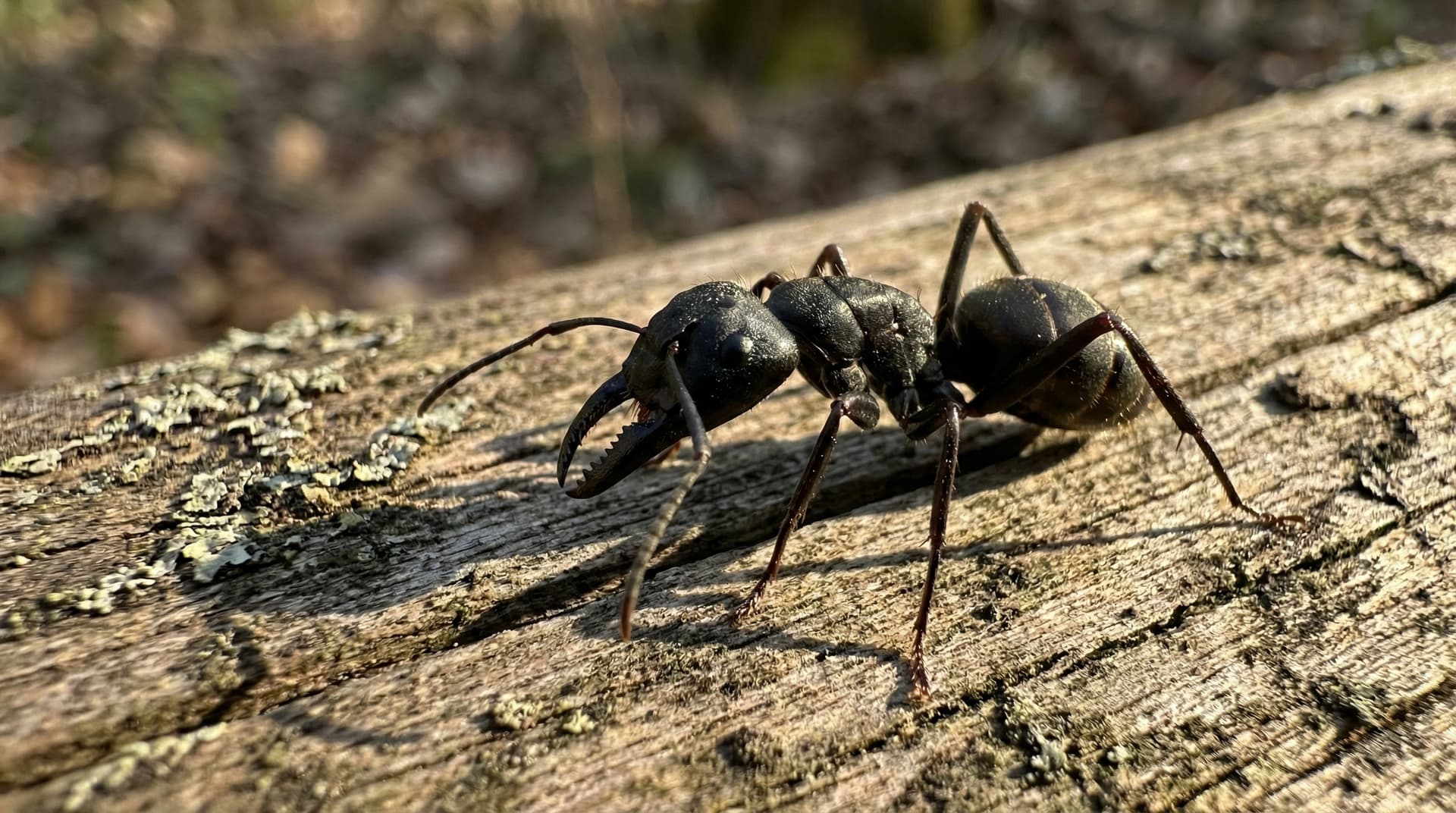
Carpenter ants are among the largest ants in North America, measuring 6-13mm. Most are solid black, though some species have reddish-brown thoraxes. They have a single node between thorax and abdomen ...
Quick Facts
100%
Satisfaction Guarantee
4.9/5
Customer Rating
24hr
Response Time
How to Identify Carpenter Ants
Carpenter ants are among the largest ants in North America, measuring 6-13mm. Most are solid black, though some species have reddish-brown thoraxes.
Carpenter ants are among the largest ants in North America, measuring 6-13mm. Most are solid black, though some species have reddish-brown thoraxes. They have a single node between thorax and abdomen and evenly rounded thorax profile. Unlike termites, they have bent antennae and a narrow "waist."
Carpenter Ants Behavior & Habits
Understanding how carpenter ants behave helps prevent infestations
Carpenter ants excavate galleries in wood to create nests—they don't eat wood but remove it to expand their colony. They prefer moist, decaying wood but will move into sound wood. Parent colonies are often in trees, stumps, or landscape timbers, with satellite colonies in structures. They're primarily nocturnal.
Carpenter Ants Risks & Dangers
What carpenter ants can do to your health and property
Health Risks
Carpenter ants can bite when disturbed but rarely do. They don't carry diseases but their presence often indicates moisture problems that could lead to mold issues.
Property Damage
Carpenter ants cause significant structural damage by hollowing out wood for nesting. Unlike termites, the damage progresses slowly over years, but untreated infestations can compromise structural integrity. Repair costs typically range from $1,000-$10,000+ depending on extent.
Signs of Carpenter Ants Infestation
Look for these indicators in your home
Carpenter Ants in Boise & the Treasure Valley
Carpenter ants are common in wooded areas around Boise, Eagle, and the foothills. They're particularly problematic in older homes and properties near mature trees. Idaho's dry climate means they strongly seek out any moisture sources in structures.
How We Eliminate Carpenter Ants
Professional treatment for complete elimination
Carpenter ant control requires locating and treating both parent and satellite colonies. We use a combination of targeted baits, dust applications in wall voids, and perimeter treatments. Complete elimination may take 2-4 weeks as the colony's structure is complex. We also identify and recommend moisture repairs to prevent re-infestation.
How to Prevent Carpenter Ants
Steps you can take to reduce the risk of infestation
Carpenter Ants Questions Answered
Common questions about identification, prevention, and treatment
Are carpenter ants worse than termites?
Carpenter ants cause damage more slowly than termites but can still compromise structural integrity over time. Unlike termites, they don't eat wood—they excavate it for nesting.
How do I know if I have carpenter ants or regular ants?
Carpenter ants are much larger (6-13mm vs 2-4mm for pavement ants), usually solid black, and you may find sawdust-like debris (frass) near their activity.
Can I treat carpenter ants myself?
DIY treatments rarely eliminate carpenter ant colonies because they nest deep in wood structures and often have multiple satellite colonies. Professional treatment is recommended for complete elimination.
Similar Pests
Learn about other pests in this category