
Pocket Gophers
Thomomys spp.
Pocket gophers are medium-sized burrowing rodents with small eyes and ears, large front teeth, and external fur-lined cheek pouches (pockets) for carrying food. Their front claws are long and powerful...
Quick Facts
100%
Satisfaction Guarantee
4.9/5
Customer Rating
24hr
Response Time
How to Identify Pocket Gophers
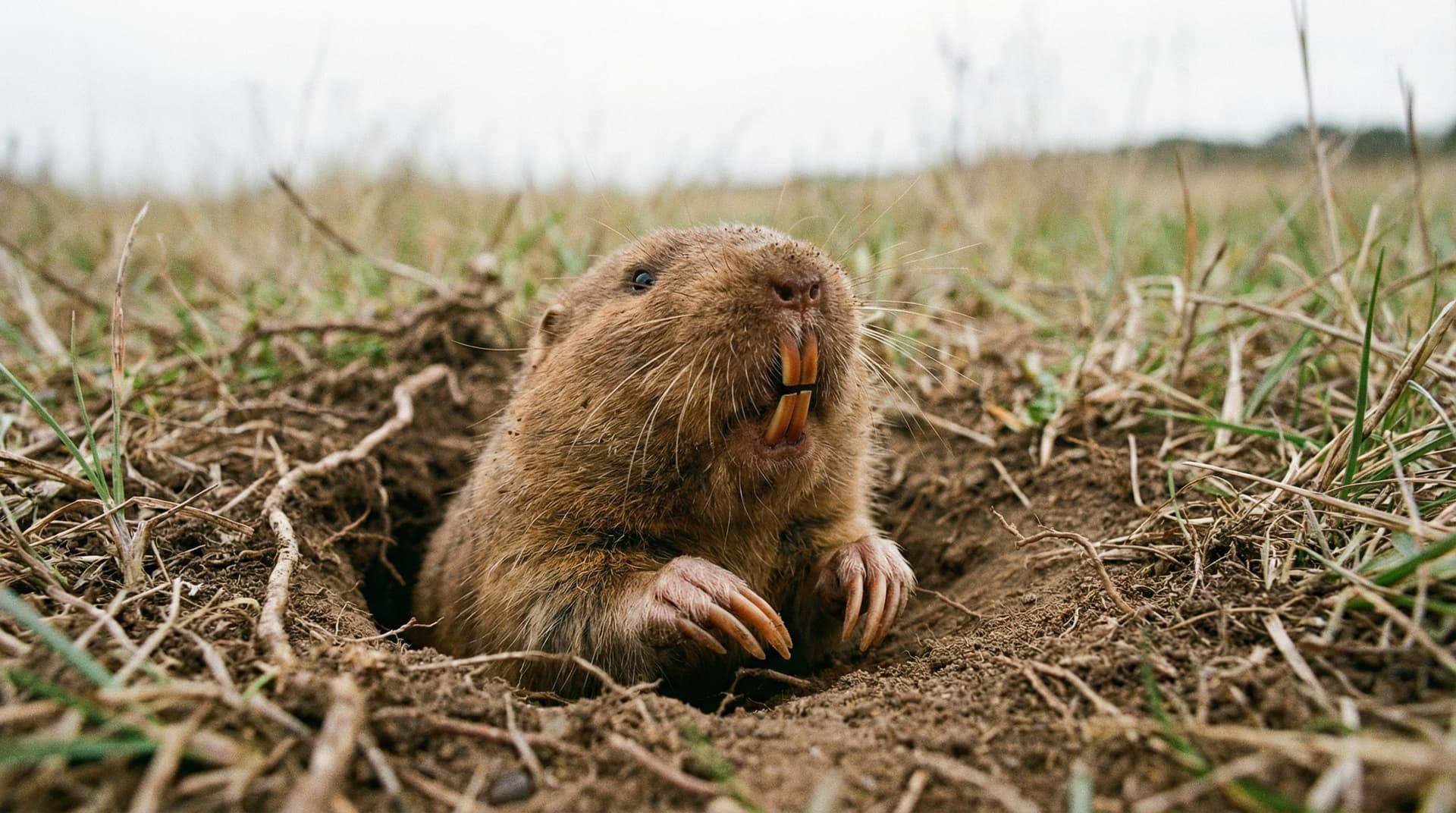
Pocket gophers are medium-sized burrowing rodents with small eyes and ears, large front teeth, and external fur-lined cheek pouches (pockets) for carrying food. Their front claws are long and powerful for digging.
Pocket gophers are medium-sized burrowing rodents with small eyes and ears, large front teeth, and external fur-lined cheek pouches (pockets) for carrying food. Their front claws are long and powerful for digging. Rarely seen above ground.
Pocket Gophers Behavior & Habits
Understanding how pocket gophers behave helps prevent infestations
Gophers are solitary, territorial rodents that create extensive burrow systems. They eat roots, bulbs, and vegetation pulled underground. A single gopher can create 200+ mounds per year and tunnel systems covering 2,000 square feet.
Pocket Gophers Risks & Dangers
What pocket gophers can do to your health and property
Health Risks
Gophers rarely contact humans directly. They can carry plague in some regions and may host fleas and ticks.
Property Damage
Gophers cause extensive damage to lawns, gardens, and agricultural crops. They eat roots and vegetation, undermine foundations and driveways, damage underground utilities, and their mounds create trip hazards and damage mowing equipment.
Signs of Pocket Gophers Infestation
Look for these indicators in your home
Pocket Gophers in Boise & the Treasure Valley
Pocket gophers are common throughout the Boise area, particularly in newer developments near previously agricultural land. They're a significant problem in Meridian, Kuna, and Star. Sandy, loamy soils are preferred, making many Treasure Valley properties ideal gopher habitat.
How We Eliminate Pocket Gophers
Professional treatment for complete elimination
Gopher control requires targeted methods. We use professional-grade trapping as the primary approach, supplemented by baiting in burrow systems for larger infestations. Exclusion barriers protect valuable plantings. Complete elimination often requires persistence as gophers may recolonize from adjacent properties.
How to Prevent Pocket Gophers
Steps you can take to reduce the risk of infestation
Pocket Gophers Questions Answered
Common questions about identification, prevention, and treatment
How can I tell gopher mounds from mole mounds?
Gopher mounds are fan or crescent-shaped with plugged holes. Mole mounds are conical (volcano-shaped) with open holes. Gophers push soil out to the side; moles push soil straight up.
Will one gopher really cause that much damage?
Yes. A single gopher can create 1-3 mounds per day, move over a ton of soil per year, and damage extensive root systems. They're also territorial, so "one gopher" means that entire area is their domain.
Do gopher sonic repellers work?
Research shows ultrasonic and vibration devices are largely ineffective for gopher control. Gophers quickly become habituated to the sounds and vibrations. Trapping remains the most reliable method.
Similar Pests
Learn about other pests in this category