
House Mouse
Mus musculus
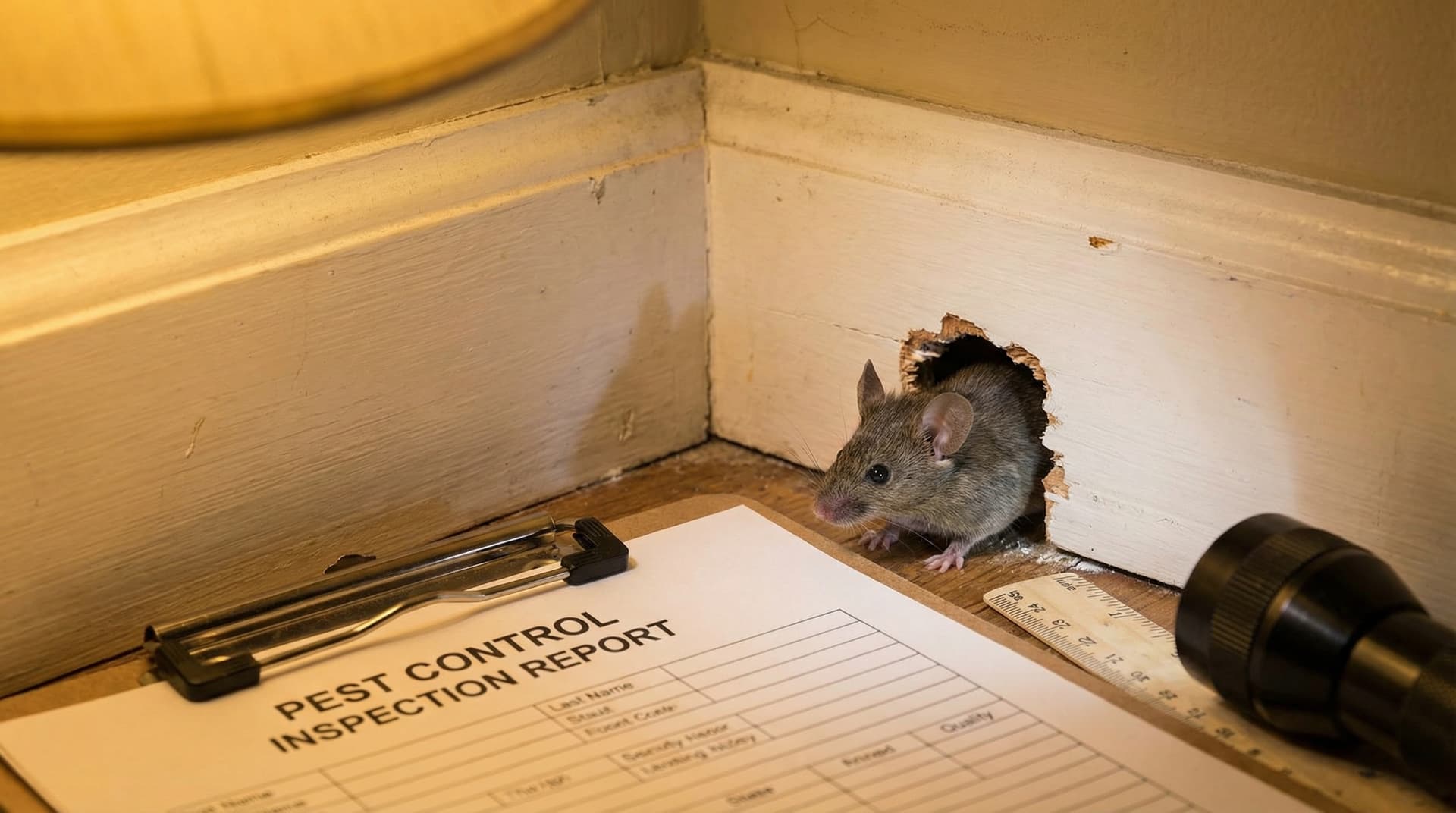
House mice are small rodents with dusty gray to light brown fur, large ears relative to body size, and long scaly tails nearly equal to body length. Adults weigh 1/2 to 1 ounce. Their droppings are ro...
Quick Facts
100%
Satisfaction Guarantee
4.9/5
Customer Rating
24hr
Response Time
How to Identify House Mouse
House mice are small rodents with dusty gray to light brown fur, large ears relative to body size, and long scaly tails nearly equal to body length. Adults weigh 1/2 to 1 ounce.
House mice are small rodents with dusty gray to light brown fur, large ears relative to body size, and long scaly tails nearly equal to body length. Adults weigh 1/2 to 1 ounce. Their droppings are rod-shaped, about 1/4 inch long, with pointed ends. They leave greasy rub marks along frequently traveled routes.
House Mouse Behavior & Habits
Understanding how house mouse behave helps prevent infestations
Mice are curious, exploring new objects in their environment. They're primarily nocturnal and can squeeze through openings as small as 1/4 inch (size of a pencil). A single female can produce 5-10 litters per year with 5-6 pups each—meaning one pair can lead to thousands of descendants annually. They stay close to food sources, typically within 10-25 feet of their nest.
House Mouse Risks & Dangers
What house mouse can do to your health and property
Health Risks
Mice contaminate far more food than they eat through droppings and urine. They spread diseases including Salmonella, Hantavirus, and Lymphocytic Choriomeningitis (LCM). Their urine and dander trigger allergies and asthma, especially in children. Mice carry parasites including fleas, ticks, and mites.
Property Damage
Mice cause significant damage by gnawing on wiring (fire risk), insulation, stored items, and structural materials. They nest in insulation, reducing its effectiveness. Contamination of stored food leads to significant waste.
Signs of House Mouse Infestation
Look for these indicators in your home
House Mouse in Boise & the Treasure Valley
House mice are year-round pests in the Treasure Valley but pressure increases significantly in fall as temperatures drop. Boise's dry climate means mice actively seek water sources indoors. They're found in all types of structures from new construction to historic homes.
How We Eliminate House Mouse
Professional treatment for complete elimination
Mouse control requires a multi-pronged approach: strategic trap placement, exclusion (sealing entry points), and sanitation recommendations. We identify all entry points during inspection and provide targeted solutions. Complete elimination typically takes 1-2 weeks, with follow-up to ensure success and prevent reinfestation.
How to Prevent House Mouse
Steps you can take to reduce the risk of infestation
House Mouse Questions Answered
Common questions about identification, prevention, and treatment
I only saw one mouse—is it a problem?
Mice are social and rarely alone. If you see one mouse, there are almost certainly more. Given their rapid reproduction rate, early intervention is critical to prevent a small problem from becoming an infestation.
Do mice come inside during certain times of year?
While mice can invade year-round, most infestations begin in fall as outdoor temperatures drop. Mice seek warmth, food, and water inside structures. In Idaho, October through November sees the highest rate of new infestations.
Can mice cause a fire?
Yes. Mice frequently gnaw on electrical wiring, and their gnawing can expose wires and cause shorts or sparks. Rodent damage is a significant cause of unexplained house fires.
Similar Pests
Learn about other pests in this category