
Voles
Microtus spp.
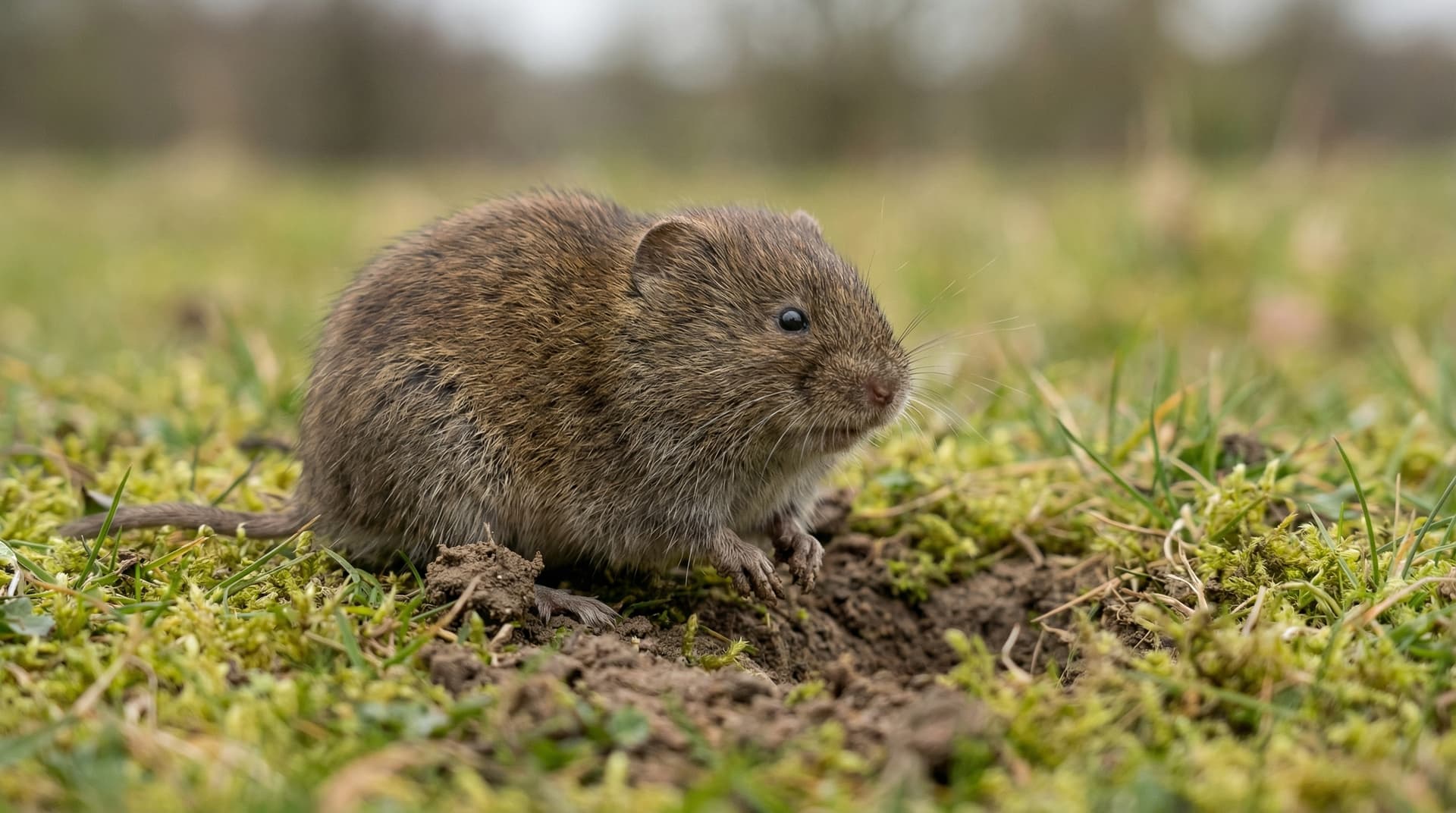
Voles (meadow mice) are small, stocky rodents with short tails, small ears, and blunt snouts. They're often confused with mice but have smaller eyes, shorter tails (about 1/3 body length), and stockie...
Quick Facts
100%
Satisfaction Guarantee
4.9/5
Customer Rating
24hr
Response Time
How to Identify Voles
Voles (meadow mice) are small, stocky rodents with short tails, small ears, and blunt snouts. They're often confused with mice but have smaller eyes, shorter tails (about 1/3 body length), and stockier bodies.
Voles (meadow mice) are small, stocky rodents with short tails, small ears, and blunt snouts. They're often confused with mice but have smaller eyes, shorter tails (about 1/3 body length), and stockier bodies. In Idaho, the montane vole and meadow vole are most common.
Voles Behavior & Habits
Understanding how voles behave helps prevent infestations
Voles create extensive tunnel systems just below the soil surface or under snow cover. They're active day and night, year-round. A single pair can produce 100+ offspring per year. They eat grass, roots, bulbs, and bark—especially damaging to fruit trees and ornamental plants during winter.
Voles Risks & Dangers
What voles can do to your health and property
Health Risks
Voles rarely enter homes and pose minimal direct health risks. However, they can carry parasites like ticks and fleas that may transmit diseases.
Property Damage
Voles cause significant landscape damage. They girdle trees and shrubs (eating bark around the base), destroy bulbs and root vegetables, kill lawns with their runway systems, and can damage irrigation lines.
Signs of Voles Infestation
Look for these indicators in your home
Voles in Boise & the Treasure Valley
Voles are extremely common throughout the Boise area, particularly in established neighborhoods with mature landscaping. Damage is worst in late winter when they girdle trees under snow cover. Eagle, Meridian, and North End Boise see heavy vole pressure due to abundant vegetation.
How We Eliminate Voles
Professional treatment for complete elimination
Vole control requires an integrated approach. We use targeted baiting in runway systems, habitat modification recommendations, and exclusion devices for valuable trees. For severe infestations, we implement population reduction through strategic trapping combined with ongoing monitoring.
How to Prevent Voles
Steps you can take to reduce the risk of infestation
Voles Questions Answered
Common questions about identification, prevention, and treatment
What's the difference between voles and moles?
Voles are small rodents that eat plants and create surface runways. Moles are insectivores with large digging claws that create raised tunnel ridges. Voles damage plants; moles damage lawns but actually eat grubs and insects.
Why are voles killing my trees?
Voles gnaw bark off trees at the base (girdling), especially under snow cover in winter. Once bark is removed around the entire trunk, the tree dies. Protect young trees with hardware cloth guards extending 18 inches high.
Do cats control voles?
Cats and other predators help reduce vole populations but rarely eliminate them. Voles reproduce so quickly (5-10 litters per year) that predation alone usually can't keep pace with population growth.
Similar Pests
Learn about other pests in this category