

Key Takeaways
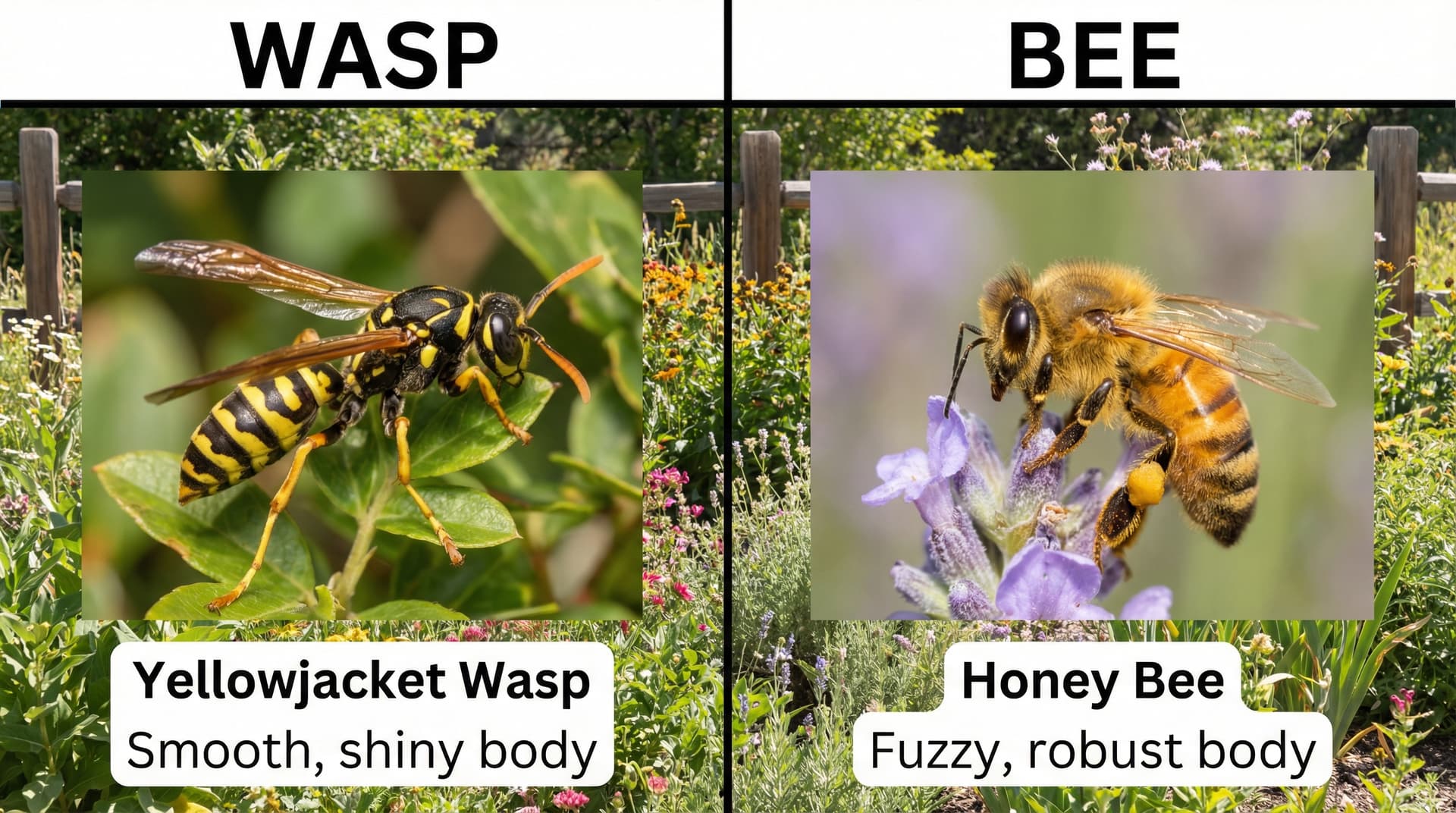
- 1Bees are fuzzy and beneficial - honeybees should be relocated, not killed
- 2Wasps and hornets have smooth bodies and can sting repeatedly
- 3Yellow jackets are most aggressive - often nest underground and in walls
- 4Paper wasps build open umbrella-shaped nests and are moderately defensive
- 5Bald-faced hornets build large enclosed nests and attack in swarms when disturbed
Understanding Idaho's Stinging Insects
The Treasure Valley is home to numerous stinging insects, and knowing the difference between them can help you make informed decisions about control. Some, like honeybees and bumblebees, are valuable pollinators that should be protected. Others, like yellow jackets and hornets, can pose significant safety risks and may require professional removal.
This guide helps you identify the most common stinging insects in Boise and understand when professional intervention is necessary.
Bees vs Wasps: The Key Differences
Before diving into specific species, understand the fundamental differences between bees and wasps:
Bees
- Fuzzy/hairy bodies covered with branched hairs
- Pollen baskets on legs (visible on honeybees and bumblebees)
- Generally docile, sting only when threatened
- Honeybees die after stinging (barbed stinger)
- Feed on pollen and nectar - important pollinators
- Rounded body shape
Wasp Characteristics
Wasps and Hornets
- Smooth, shiny bodies with little to no hair
- Narrow waist between thorax and abdomen
- Can sting multiple times (smooth stingers)
- Predators - hunt other insects, also eat sweets
- More likely to be aggressive, especially near nests
- Longer legs that dangle when flying
Honeybees: Beneficial Pollinators
Honeybee populations are declining worldwide. If you find honeybees on your property, contact a local beekeeping association for free relocation services rather than calling an exterminator.
Honeybees (Apis mellifera) are crucial pollinators that should be protected whenever possible. If you find a honeybee swarm or hive, contact a local beekeeper for relocation rather than extermination.
Identification
- Size: About 1/2 inch long
- Color: Golden brown with darker brown bands
- Body: Fuzzy, covered with fine hair
- Behavior: Generally docile, only sting when defending hive
- Nest: Large wax hives in cavities - trees, walls, chimneys
Bumblebees: Fuzzy and Generally Harmless
Bumblebees are large, fuzzy bees that are excellent pollinators. They're generally docile and rarely sting unless directly handled or their nest is disturbed.
Identification
- Size: Large, 3/4 to 1 inch
- Color: Black and yellow bands, sometimes with orange
- Body: Very fuzzy, round
- Behavior: Docile, slow-moving
- Nest: Small colonies in ground cavities, old rodent burrows
Yellow Jackets: Most Dangerous Stinging Insect
Yellow jacket nests can contain thousands of workers by late summer. They become increasingly aggressive in August and September. NEVER attempt to remove a yellow jacket nest yourself - their attacks are coordinated and can result in dozens of stings.
Yellow jackets (Vespula species) are the most dangerous stinging insects in Idaho. They're aggressive, especially in late summer, and often nest in hidden locations like underground or inside walls.
Identification
- Size: About 1/2 inch long
- Color: Bright yellow and black stripes
- Body: Smooth, shiny, hairless
- Shape: Defined narrow waist
- Behavior: Highly aggressive, especially near food or nests
Yellow Jacket Nest Locations
Yellow jackets nest in concealed locations, making accidental encounters common:
- Underground - In old rodent burrows, visible only by entrance hole
- Wall voids - Entry through gaps in siding, very difficult to treat
- Attics and soffits - Concealed but protected
- Under decks and porches - Disturbed by vibration
- In dense shrubs - Hidden by foliage
Paper Wasps: Moderately Defensive
Paper wasp nests are often the only nests homeowners can safely remove themselves - IF the nest is small (under 2 inches), easily accessible, and you have no allergies. However, professional removal is always the safest option.
Paper wasps (Polistes species) are commonly encountered around Idaho homes. They build distinctive open-celled, umbrella-shaped nests and are less aggressive than yellow jackets - but will still defend their nests.
Identification
- Size: About 3/4 inch long
- Color: Brown with yellow or reddish markings
- Body: Slender, smooth
- Legs: Very long, dangle when flying
- Nest: Open-celled, umbrella-shaped, papery, often under eaves
- Behavior: Less aggressive than yellow jackets but will sting if threatened
Bald-Faced Hornets: Aggressive Colony Defenders
Bald-faced hornets will attack anyone who comes within 10-15 feet of their nest. They can sting repeatedly and will pursue threats for a significant distance. NEVER attempt removal yourself - always call professionals.
Bald-faced hornets (Dolichovespula maculata) are actually a type of yellow jacket despite their name. They build large, enclosed paper nests and are extremely aggressive when defending their colony.
Identification
- Size: Large, about 3/4 inch
- Color: Black with white/ivory face and markings
- Body: Stout, smooth
- Nest: Large football or basketball-sized enclosed paper nest
- Behavior: Very aggressive - will attack in swarms if nest is approached
Mud Daubers: Solitary and Rarely Sting
Mud daubers are beneficial insects that prey on spiders, including black widows. Consider tolerating their presence unless nests are in high-traffic areas. Their old nests can be scraped off after the wasps have left.
Mud daubers are solitary wasps that build distinctive mud tube nests. Unlike social wasps, they don't defend their nests aggressively and rarely sting. They're actually beneficial because they prey on spiders, including black widows.
Identification
- Size: About 1 inch
- Color: Black, blue-black, or metallic
- Body: Very long, thin waist (thread-waisted)
- Nest: Mud tubes or chambers under eaves, in garages
- Behavior: Solitary, non-aggressive, rarely sting
When to Call a Professional
Professional wasp and hornet removal is fast, safe, and affordable. We identify the species, locate all nest entrances, and eliminate the colony with guaranteed results. Treatment starts at just $49.
Contact Green Guard Pest Control at (208) 297-7947 for safe nest removal when:
- Nest is larger than a golf ball - Colony has grown too large for safe DIY removal
- Nest is in a wall or underground - Hidden nests are impossible to treat safely
- Yellow jackets or bald-faced hornets - Too aggressive for DIY removal
- Anyone in your household is allergic - Stings can be life-threatening
- Nest is near high-traffic areas - Doors, patios, play areas, walkways
- You've been stung approaching the nest - Colony is on high alert
Need Professional Help?
Get Same-Day Pest Control in Boise
Our local experts are standing by. Guaranteed results or we re-treat for free.