

Key Takeaways
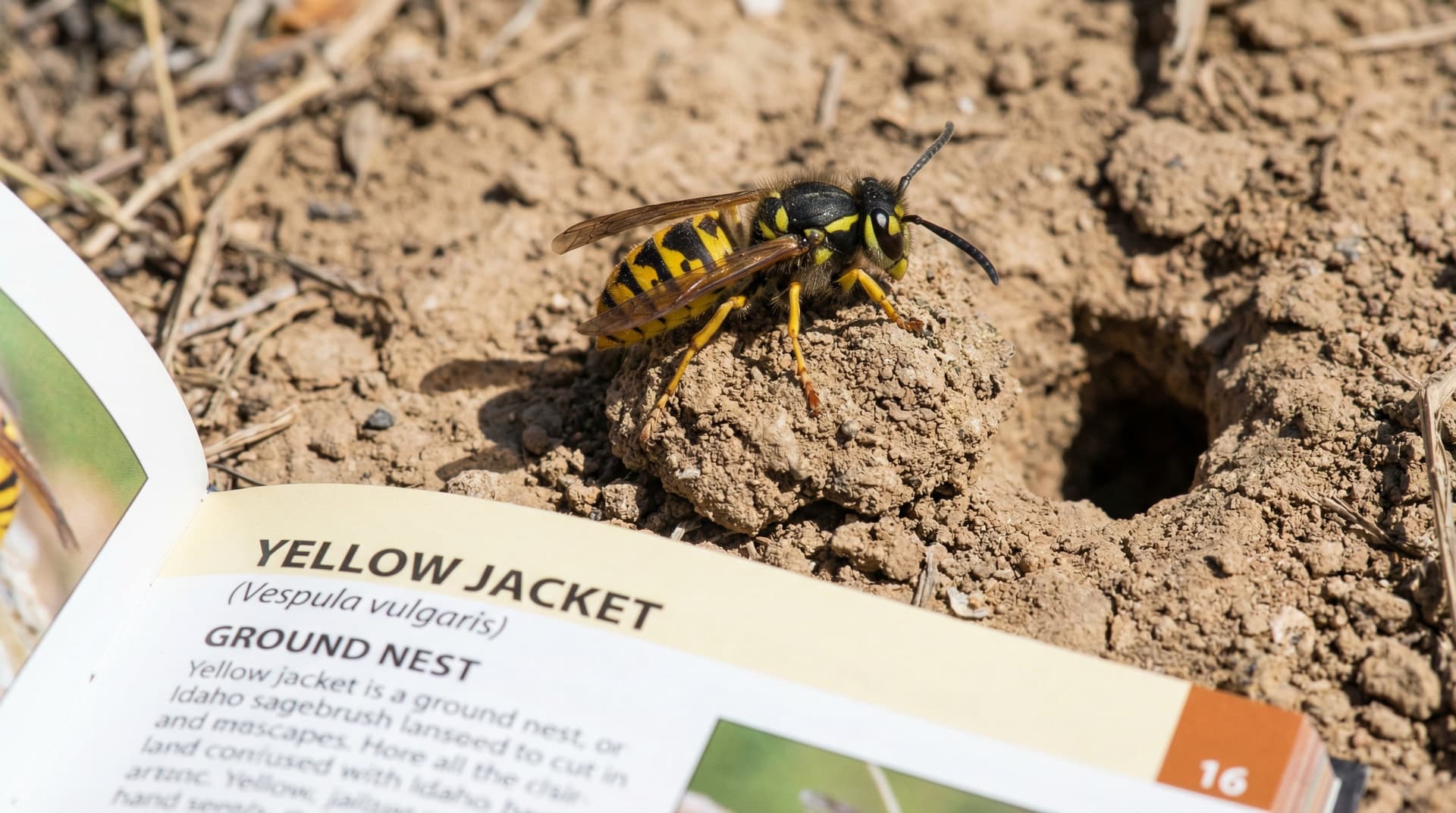
- 1Yellow jackets have bright yellow and black stripes with smooth, shiny bodies
- 2They often nest underground or in wall voids - hidden until disturbed
- 3Colonies can contain thousands of workers by late summer
- 4Most aggressive in August-September when defending peak-size colonies
- 5Can sting repeatedly - attacks are often coordinated swarm responses
Why Yellow Jackets Are Dangerous
Yellow jackets account for the majority of stinging insect incidents in Idaho. Their aggressive nature, hidden nest locations, and ability to sting repeatedly make them a serious safety concern for Treasure Valley homeowners.
Unlike honeybees, which sting once and die, yellow jackets can sting multiple times. And unlike the relatively docile paper wasps, yellow jackets actively defend their territory and food sources, often attacking without provocation near nests.
Identifying Yellow Jackets
Yellow jackets have distinctive characteristics:
- Size: About 1/2 inch long
- Color: Bright yellow and black banding
- Body: Smooth, shiny, hairless (bees are fuzzy)
- Waist: Narrow, defined waist between thorax and abdomen
- Wings: Fold lengthwise when at rest
- Behavior: Fast, direct flight; hover near food and faces
Yellow Jacket vs Honeybee
Many people confuse yellow jackets with honeybees:
Body
Yellow Jacket: Smooth, shiny | Honeybee: Fuzzy, hairy
Color
Yellow Jacket: Bright yellow/black | Honeybee: Golden brown/black
Shape
Yellow Jacket: Narrow waist | Honeybee: Thick, rounded
Sting
Yellow Jacket: Can sting repeatedly | Honeybee: Stings once, then dies
Behavior
Yellow Jacket: Aggressive near food | Honeybee: Generally docile
Yellow Jacket Nest Locations
Underground nests are especially dangerous - you may not see them until you step on one while mowing. Always watch for yellow jackets entering and exiting a ground-level hole before walking in an area.
Yellow jackets often nest in hidden locations, leading to accidental encounters:
- Underground - Old rodent burrows, cracks in soil (most common)
- Wall voids - Inside walls through gaps in siding
- Attics and soffits - Protected ceiling spaces
- Under decks and porches - Disturbed by vibration and foot traffic
- In dense shrubs - Hidden by foliage
- Stacked materials - Lumber, rocks, or debris piles
Seasonal Behavior Patterns
Yellow jacket behavior changes throughout the season:
- Spring: Queen emerges, starts small nest, produces first workers
- Early Summer: Colony grows; workers focus on protein (hunting insects)
- Mid-Summer: Rapid colony expansion; nest reaches significant size
- Late Summer (August-Sept): PEAK DANGER - colony at maximum size, workers aggressive
- Fall: New queens produced; workers become more desperate for food
- Winter: Colony dies; only new queens survive to overwinter
Why Late Summer Is Most Dangerous
Yellow jackets are highly attracted to sweet drinks in late summer. Always check cans and cups before drinking at outdoor gatherings. Stings to the mouth and throat are medical emergencies.
August and September see the most yellow jacket stings because:
- Colonies have reached peak size (thousands of workers)
- Workers are more defensive protecting large colonies
- Natural food sources (insects) are declining
- Yellow jackets become more attracted to human food and drinks
- More human outdoor activity overlaps with defensive zones
Yellow Jacket Attack Behavior
Understanding how yellow jackets attack helps explain their danger:
- Alarm pheromone - When one stings, it releases a chemical that recruits others
- Coordinated attacks - Multiple yellow jackets may attack simultaneously
- Pursuit - They will chase threats for significant distances
- Repeated stinging - Each individual can sting multiple times
- Vibration sensitivity - Mowing and ground vibration can trigger attacks
- Territorial - Will attack anything near the nest
Sting Reactions and Treatment
If you experience difficulty breathing, throat swelling, dizziness, or rapid heartbeat after a sting, call 911 immediately. This is anaphylaxis - a life-threatening allergic reaction that requires emergency treatment.
Yellow jacket stings can cause reactions ranging from mild to life-threatening:
- Normal reaction: Pain, redness, swelling at sting site; resolves in hours to days
- Large local reaction: Extensive swelling beyond sting site; may last a week
- Allergic reaction (mild): Hives, itching beyond sting site
- Anaphylaxis (severe): Difficulty breathing, throat swelling, dizziness - EMERGENCY
Why DIY Removal Is Dangerous
NEVER pour gasoline, water, or try to burn a yellow jacket nest. These methods don't work, can cause fires or explosions, and will trigger massive defensive attacks. Professional treatment is the only safe option.
Never attempt to remove a yellow jacket nest yourself:
- Underground nests - Can't be effectively treated with store-bought products
- Wall nests - Require specialized equipment to access
- Swarm attacks - Disturbing a nest can trigger coordinated attacks
- Night attacks - Yellow jackets can sting in darkness near their nest
- Incomplete treatment - Partial kills leave an angry, defensive colony
- Fire and water myths - These methods don't work and are dangerous
When to Call a Professional
Professional yellow jacket removal is fast, safe, and affordable. We identify all nest entrances, apply specialized treatments, and ensure complete colony elimination. Treatment starts at just $49.
Contact Green Guard Pest Control at (208) 297-7947 immediately if:
- You see yellow jackets entering/exiting a hole in ground or structure
- You notice increased yellow jacket activity around your property
- You've been stung near your home - indicates a nearby nest
- There's a visible nest - any size requires professional removal
- Yellow jackets are at outdoor gatherings - nest is likely close
- Anyone in your household is allergic - prevention is critical
Need Professional Help?
Get Same-Day Pest Control in Boise
Our local experts are standing by. Guaranteed results or we re-treat for free.