
Pantry Moths (Indian Meal Moths)
Plodia interpunctella
Indian meal moths are easily identified by their distinctive wings: the inner half is creamy-white and the outer half is reddish-brown/copper. Larvae are cream-colored caterpillars often found with we...
Quick Facts
100%
Satisfaction Guarantee
4.9/5
Customer Rating
24hr
Response Time
How to Identify Pantry Moths (Indian Meal Moths)
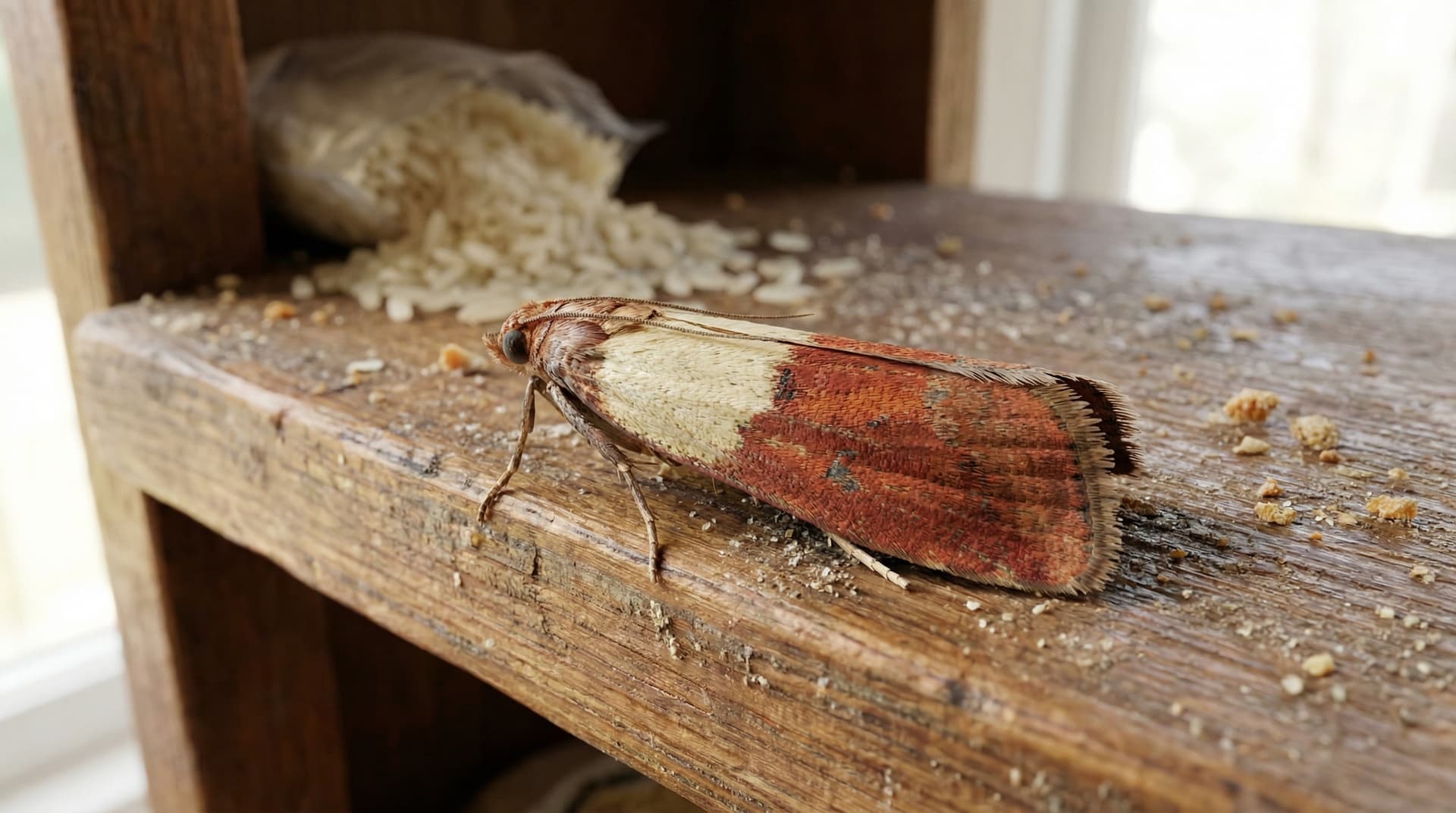
Indian meal moths are easily identified by their distinctive wings: the inner half is creamy-white and the outer half is reddish-brown/copper. Larvae are cream-colored caterpillars often found with webbing in food products.
Indian meal moths are easily identified by their distinctive wings: the inner half is creamy-white and the outer half is reddish-brown/copper. Larvae are cream-colored caterpillars often found with webbing in food products. They're the most common stored product pest.
Pantry Moths (Indian Meal Moths) Behavior & Habits
Understanding how pantry moths (indian meal moths) behave helps prevent infestations
Larvae feed on grains, cereals, dried fruit, nuts, pet food, bird seed, and many other stored products. They spin silken webbing in food, often creating clumps. Adults don't eat—they only reproduce. Complete lifecycle takes 4-6 weeks, allowing rapid population growth.
Pantry Moths (Indian Meal Moths) Risks & Dangers
What pantry moths (indian meal moths) can do to your health and property
Health Risks
Pantry moths don't bite or transmit diseases. Contaminated food should be discarded but accidental consumption isn't dangerous—just unappetizing.
Property Damage
They contaminate and ruin stored food products. Infestations can spread throughout a kitchen, affecting thousands of dollars in food over time.
Signs of Pantry Moths (Indian Meal Moths) Infestation
Look for these indicators in your home
Pantry Moths (Indian Meal Moths) in Boise & the Treasure Valley
Pantry moths are common throughout Boise and often enter homes in purchased products. Bird seed and pet food stored in garages are frequent infestation sources. Many infestations start from bulk food purchases or products transferred from other storage containers.
How We Eliminate Pantry Moths (Indian Meal Moths)
Professional treatment for complete elimination
Pantry moth elimination starts with inspection and removal of all infested products. We clean and treat pantry areas, install pheromone traps to monitor and catch adults, and may apply targeted treatments. Successful control requires the homeowner to maintain proper food storage practices.
How to Prevent Pantry Moths (Indian Meal Moths)
Steps you can take to reduce the risk of infestation
Pantry Moths (Indian Meal Moths) Questions Answered
Common questions about identification, prevention, and treatment
Where do pantry moths come from?
Most infestations start with moths already present in purchased products—eggs or larvae in grains, flour, cereals, dried fruit, pet food, or bird seed. They rarely enter homes from outside.
How do I get rid of pantry moths completely?
Complete elimination requires: 1) Remove and inspect ALL dry goods, 2) Discard anything infested or questionable, 3) Thoroughly clean pantry, 4) Store remaining food in airtight containers, 5) Use pheromone traps to catch remaining adults.
Are the moths I see flying the problem?
Flying moths are adult males (attracted to pheromone traps). They indicate an active infestation but aren't the source—the larvae in food are. You must find and eliminate the infested food source.
Similar Pests
Learn about other pests in this category