
Black Widow Spider
Latrodectus hesperus
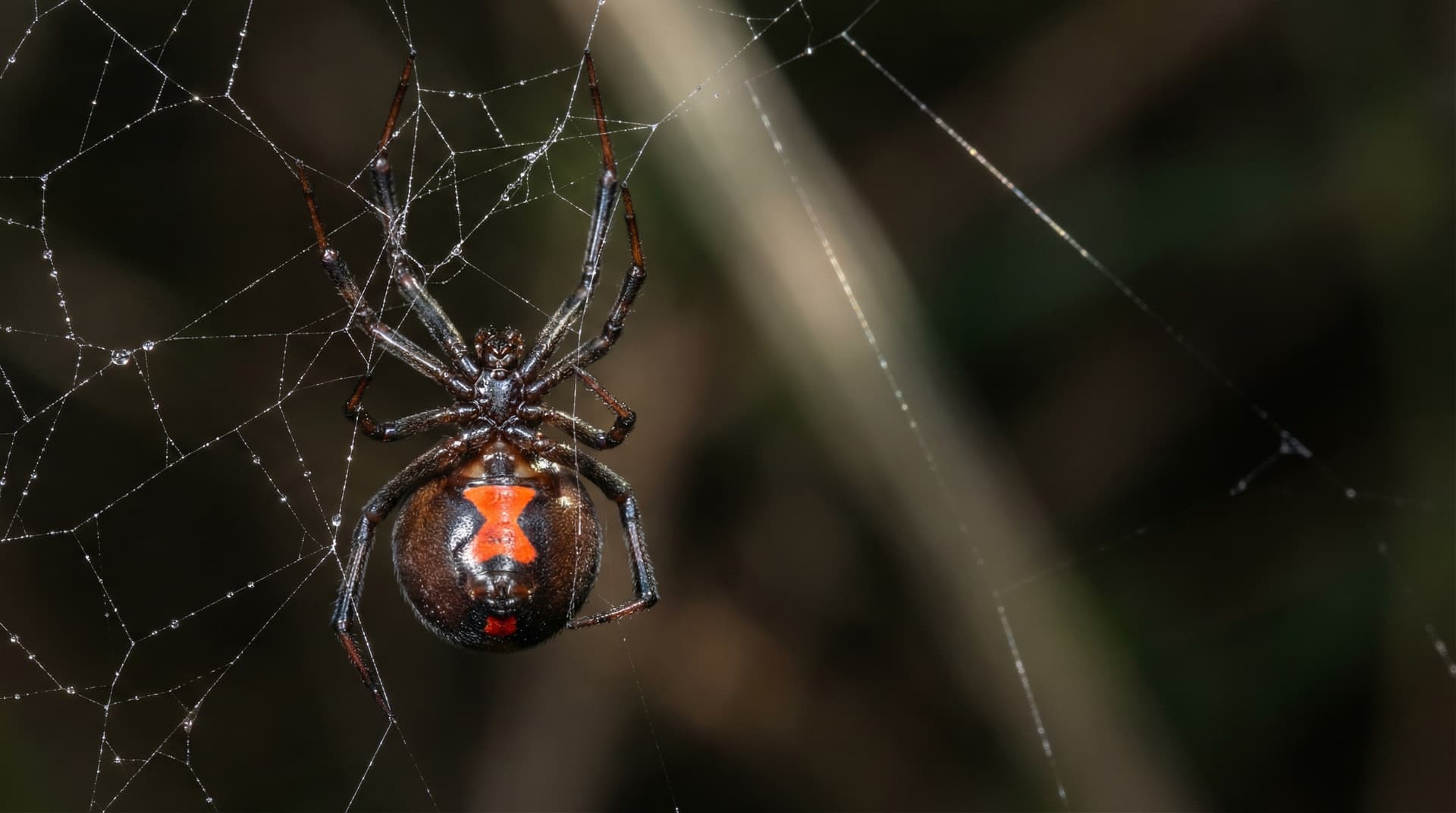
Female black widows are shiny jet-black with a distinctive red hourglass marking on the underside of their globular abdomen. They measure 8-15mm in body length with leg spans up to 50mm. Males are sma...
Quick Facts
100%
Satisfaction Guarantee
4.9/5
Customer Rating
24hr
Response Time
How to Identify Black Widow Spider
Female black widows are shiny jet-black with a distinctive red hourglass marking on the underside of their globular abdomen. They measure 8-15mm in body length with leg spans up to 50mm.
Female black widows are shiny jet-black with a distinctive red hourglass marking on the underside of their globular abdomen. They measure 8-15mm in body length with leg spans up to 50mm. Males are smaller (3-4mm), brown with lighter markings, and are not dangerous. Webs are irregular, tangled, and very strong.
Black Widow Spider Behavior & Habits
Understanding how black widow spider behave helps prevent infestations
Black widows are shy, non-aggressive spiders that only bite when threatened or accidentally pressed against skin. They're nocturnal and hide during the day in dark, undisturbed areas. They build irregular webs low to the ground to catch ground-dwelling insects. Females may eat males after mating (hence the name).
Black Widow Spider Risks & Dangers
What black widow spider can do to your health and property
Health Risks
Black widow venom is neurotoxic and 15 times stronger than rattlesnake venom. Bites cause severe pain, muscle cramps, abdominal pain, and elevated blood pressure. While rarely fatal in healthy adults, bites require medical attention. Children, elderly, and those with compromised health are at higher risk.
Property Damage
Black widows don't cause property damage but their presence near entries and in garages creates ongoing bite risk.
Signs of Black Widow Spider Infestation
Look for these indicators in your home
Black Widow Spider in Boise & the Treasure Valley
Black widows are common throughout the Treasure Valley, particularly in Boise's older neighborhoods with established landscaping. They thrive in Idaho's dry climate and are most frequently encountered in garages, water meter boxes, and outdoor storage areas. Activity peaks from May through October.
How We Eliminate Black Widow Spider
Professional treatment for complete elimination
Black widow control requires thorough treatment of harboring areas including garages, sheds, and exterior perimeters. We use residual products that remain effective for months in protected areas. Regular quarterly service significantly reduces black widow populations by eliminating both spiders and their prey insects.
How to Prevent Black Widow Spider
Steps you can take to reduce the risk of infestation
Black Widow Spider Questions Answered
Common questions about identification, prevention, and treatment
How common are black widows in Boise?
Black widows are fairly common in the Boise area, especially in older neighborhoods with established landscaping. Most encounters occur in garages, sheds, and outdoor storage areas.
What should I do if I'm bitten by a black widow?
Seek medical attention immediately. Clean the bite with soap and water, apply ice, and try to capture the spider for identification. Most bites are treatable but require professional medical care.
How do I prevent black widow bites?
Always wear gloves when moving stored items, firewood, or outdoor equipment. Shake out shoes and clothing left outside. Regular pest control service significantly reduces black widow populations.
Similar Pests
Learn about other pests in this category