
Giant House Spider
Eratigena atrica
Giant house spiders are among the largest spiders in Idaho, with leg spans up to 75mm (3 inches). They're brown with mottled darker markings and build funnel webs. They're often confused with hobo spi...
Quick Facts
100%
Satisfaction Guarantee
4.9/5
Customer Rating
24hr
Response Time
How to Identify Giant House Spider
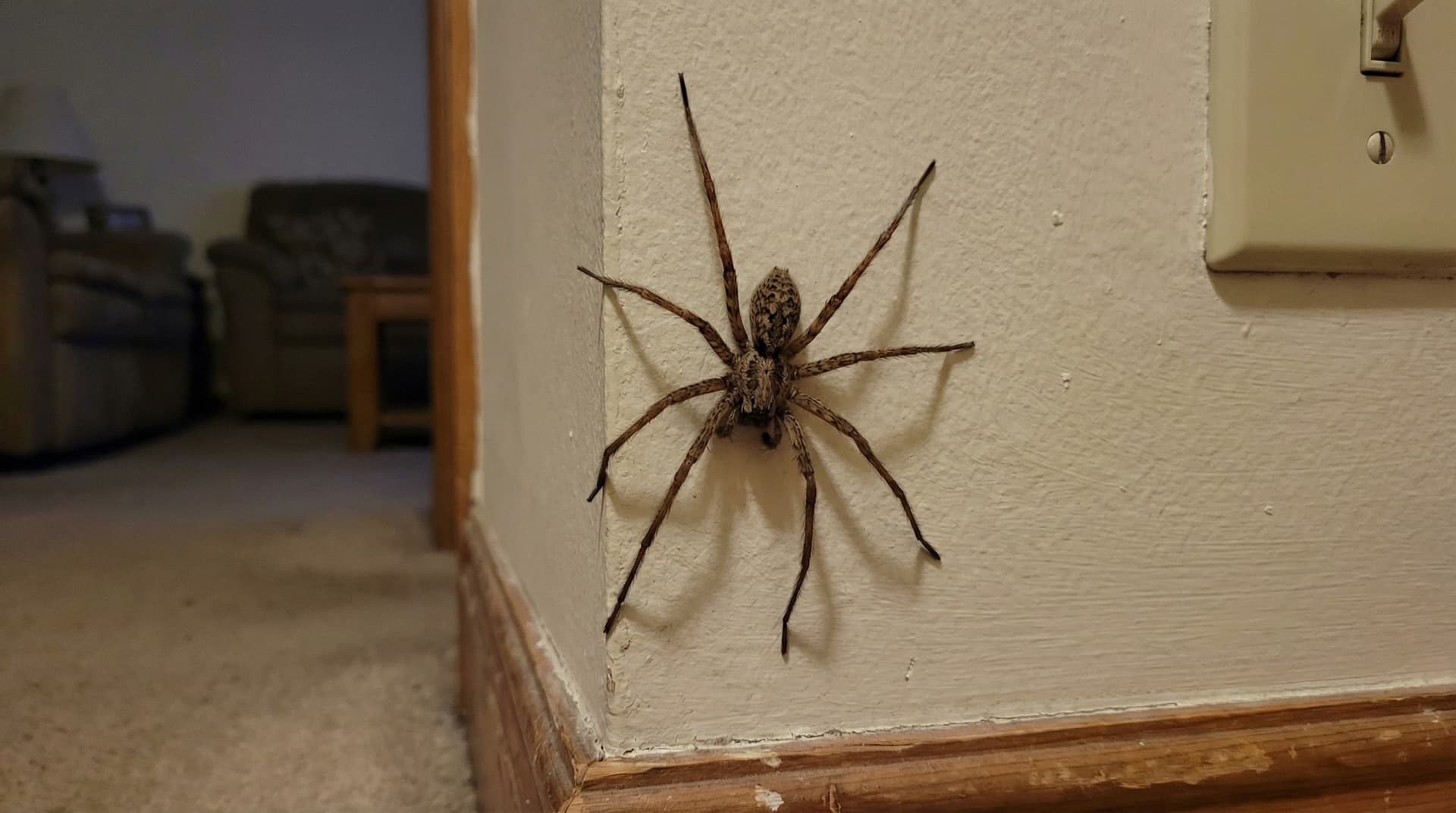
Giant house spiders are among the largest spiders in Idaho, with leg spans up to 75mm (3 inches). They're brown with mottled darker markings and build funnel webs.
Giant house spiders are among the largest spiders in Idaho, with leg spans up to 75mm (3 inches). They're brown with mottled darker markings and build funnel webs. They're often confused with hobo spiders but are larger with banded legs and more distinct markings.
Giant House Spider Behavior & Habits
Understanding how giant house spider behave helps prevent infestations
Giant house spiders are fast runners that build funnel webs in dark corners. Males wander in late summer/fall seeking mates, leading to increased indoor sightings. Despite their alarming size, they're shy and prefer to flee rather than bite. They're actually competitors of hobo spiders.
Giant House Spider Risks & Dangers
What giant house spider can do to your health and property
Health Risks
Giant house spiders rarely bite and bites are not medically significant—comparable to a minor bee sting. Their large size makes them frightening but they're not dangerous.
Property Damage
No property damage. Their webs can be unsightly in corners and crevices.
Signs of Giant House Spider Infestation
Look for these indicators in your home
Giant House Spider in Boise & the Treasure Valley
Giant house spiders are common in Boise basements and garages. Their terrifying size leads to many calls, but they're actually beneficial—they compete with and prey upon hobo spiders. Most sightings occur in September-October during mating season.
How We Eliminate Giant House Spider
Professional treatment for complete elimination
Giant house spider control involves treating harboring areas with residual products, reducing prey populations, and exclusion. Their presence actually helps control hobo spiders, so management should focus on exclusion rather than elimination when possible.
How to Prevent Giant House Spider
Steps you can take to reduce the risk of infestation
Giant House Spider Questions Answered
Common questions about identification, prevention, and treatment
Is this a hobo spider or giant house spider?
Giant house spiders are larger with distinctly banded legs. Hobo spiders have solid brown legs without bands. Giant house spiders are actually harmless and prey on hobo spiders.
Similar Pests
Learn about other pests in this category